Rapid Potato Seed Prep: Fast Cutting for Gardeners
By Dirtpatcheaven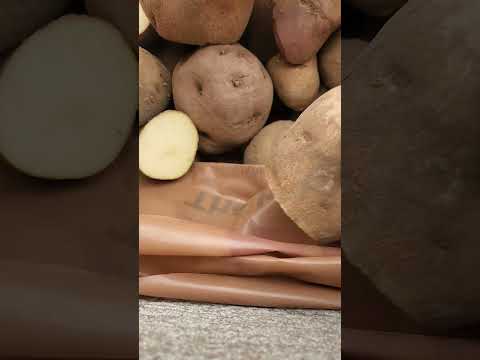
TL;DR: Efficiently cut chitted seed potatoes into golf-ball-sized pieces with at least one eye to maximize your potato harvest.
- Select healthy, chitted potatoes.
- Cut into golf-ball-sized pieces.
- Ensure each piece has at least one eye.
- Cure cut pieces for 1-2 days.
- Maximize yield and minimize waste.
Why it matters: Proper preparation of seed potatoes significantly boosts potato crop health and yield, making your gardening efforts more productive.
Do this next: Cure your cut seed potatoes for a day or two before planting to prevent rot and promote healing.
Recommended for: Gardeners looking to improve their potato propagation efficiency and yield potential yield.
The provided content discusses a method for quickly preparing seed potatoes for planting, a common practice in gardening to ensure a healthy and productive potato crop. The core idea revolves around efficiently cutting larger potato tubers into smaller pieces, each containing at least one "eye" or sprout, which is essential for the growth of a new plant.
Traditionally, gardeners might spend considerable time individually inspecting and cutting each potato, often using a knife. However, this method introduces a more streamlined approach, particularly beneficial when dealing with a large quantity of seed potatoes. The technique involves a simple yet effective setup: a sturdy cutting surface, a sharp knife, and a container to hold the cut pieces.
The process begins with selecting healthy, disease-free potatoes that have started to sprout or "chit." Chitting is the process of encouraging sprouts to form before planting, which can lead to earlier and larger harvests. Once chitted, the potatoes are ready for cutting. The key principle is to ensure each cut piece is roughly the size of a golf ball or a small egg, and critically, that it contains at least one viable eye. Some gardeners prefer to have two or three eyes per piece to increase the chances of successful growth, but one is the minimum requirement.
The described fast cutting method often involves a systematic approach rather than random slicing. One technique is to make an initial cut lengthwise through the potato, effectively halving it. Then, depending on the size of these halves, further cuts can be made to create the desired golf-ball-sized pieces, always keeping an eye out for the presence of sprouts. For very large potatoes, multiple cuts might be necessary to maximize the number of viable seed pieces. The goal is to minimize waste while ensuring each piece has the potential to grow.
After cutting, it's crucial to allow the cut surfaces to "cure" or dry out for a day or two. This curing process forms a protective layer over the cut surface, which helps prevent rot and disease once the seed potatoes are planted in the soil. Without proper curing, the moist cut surfaces are highly susceptible to fungal and bacterial infections, especially in damp soil conditions, which can lead to the loss of the seed potato and, consequently, the plant. The curing can be done by spreading the cut pieces in a single layer in a cool, well-ventilated area, away from direct sunlight.
The benefits of this fast cutting method extend beyond just saving time. By preparing seed potatoes efficiently, gardeners can ensure a more uniform planting process. When all seed pieces are roughly the same size and have been properly cured, they tend to sprout and grow more consistently, leading to a more even crop development. This uniformity can be advantageous for harvesting and overall crop management.
Furthermore, this technique is particularly useful for gardeners who grow potatoes on a larger scale, where manual, slow cutting would be impractical. It allows for the rapid processing of many pounds of potatoes, making the planting preparation phase much less labor-intensive. The emphasis remains on careful observation during the cutting process to ensure each piece is viable, despite the speed. This balance between efficiency and effectiveness is central to the method.