Amazon Regenerative Farming Boosts Food Security for 1,000 Farmers
PermaNews Brief
Key Takeaways
Amazonian farmers are boosting food security and resilience through regenerative agriculture, improving yields and reducing chemical reliance.
- Regenerative farming enhances food security and resilience.
- Farmers learn soil conservation and water management.
- Crop rotation restores fertility naturally.
- Integrated pest control reduces chemical use.
- Local bio-inputs improve soil health.
- Post-harvest techniques minimize food loss.
- Agroforestry diversifies income and ecosystems.
Why It Matters
Regenerative farming offers a powerful model for communities worldwide to improve food security, adapt to climate change, and build self-sufficiency while restoring ecological health.
What to Do Next
Explore local workshops or resources on soil conservation techniques like contour plowing or vermicomposting to implement in your garden or farm.
Recommended for: Smallholder farmers, community organizers, and permaculture practitioners interested in sustainable food systems and ecological restoration in tropical regions.
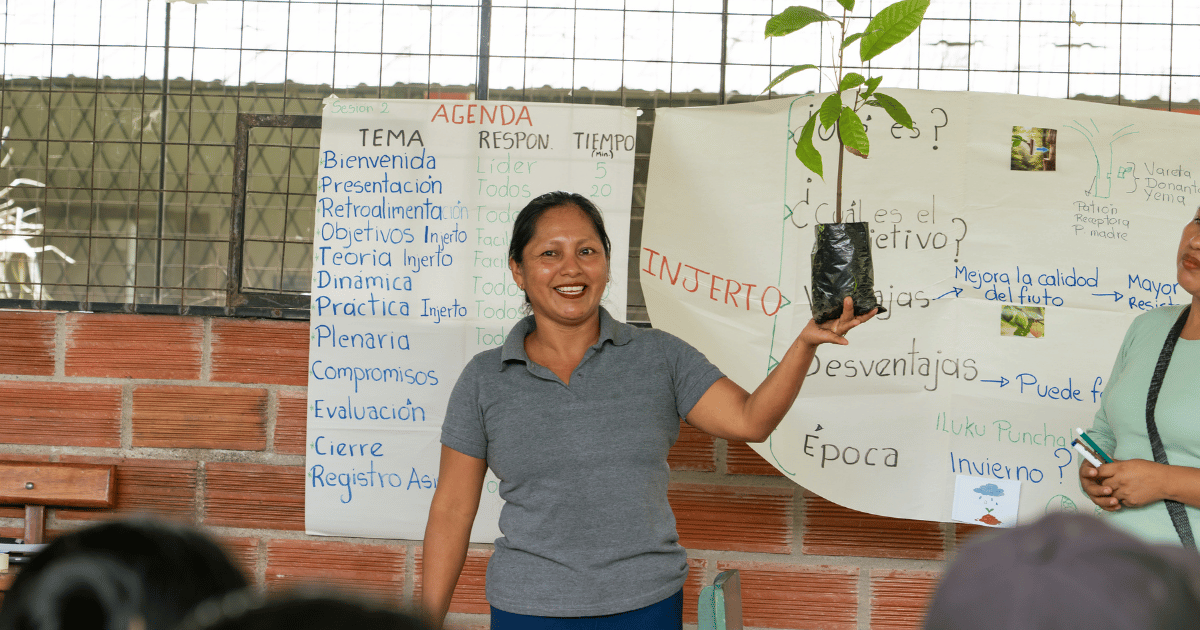
Fundación Pachamama's practitioner-led initiative in Amazon provinces exemplifies regenerative farming for food security, resilience, and self-sufficiency among 1,000 smallholder farmers. Through Farmer Field Schools, participants receive hands-on training in soil conservation techniques like contour plowing and terracing to combat erosion on steep slopes. Crop rotation protocols cycle staples such as manioc, maize, and beans with nitrogen-fixers like peanuts and cowpeas, restoring fertility without synthetic fertilizers. Water management strategies include swales, keyline design, and rainwater harvesting ponds to optimize infiltration and reduce flood risks in rainy seasons. Pest control employs integrated methods: companion planting with marigolds and neem trees, microbial biopesticides from Bacillus thuringiensis, and trap crops to divert insects. Bio-input production workshops teach composting with local materials—kitchen scraps, crop residues, and animal manure—fermented into bokashi or vermicompost for nutrient-dense amendments. Natural repellents from chili-garlic extracts and essential oils from citronella provide chemical-free protection. Post-harvest handling covers solar drying, hermetic storage bags, and community processing units to minimize losses up to 40%. Documented results include yield increases of 25-50% within two years, chemical dependency reduction by 80%, and restored agroforestry systems blending food crops with timber and fruit trees for diversified income. Resilience is enhanced through seed banks of climate-adapted varieties and group marketing cooperatives. Practical steps involve farm mapping for microclimates, seasonal calendars for planting, and soil testing kits for pH and nutrient monitoring. Challenges like initial labor intensity are mitigated by labor-sharing networks (mingas). This program integrates permaculture ethics of earth care and fair share, fostering community-led innovation. Expert evaluations confirm biodiversity gains, with bird and pollinator populations rebounding, supporting pollination services. Economic analysis shows ROI within 18 months via cost savings and premium pricing for organic produce, making it a blueprint for tropical regenerative organic systems.
Source: news.pachamama.org
Related Analysis
- New Research Splits Silvopasture's Profit Case From Its Ecology — A small but consistent set of signals indicates silvopasture is shifting from ecological ideal to quantified economic ca…
- Seed-Saving Teachers Shift Focus to On-Farm Crop Trialing — Early signals suggest structured seed-saving workshops are coupling genetic diversity education with on-farm crop triali…
Related on PermaNews
- Ernst Götsch's Cacao Syntropy: Master Agroforestry Now (How-To Guide)
- Borneo's Rainforest Revival: Dr. Smits' Sugar Palm Village Hub (Case Study)
- Nagaland's Jhum-Alder Agroforestry: Climate-Smart Farming (Article)
- Revolutionizing Agriculture: People, Nature, & a Fertile Earth (Article)
- Interaktive Karte: Erfolgreiche Agroforst- und Mischbetriebe in Europa (Event)
- Regenerative Farming: Cultivating Healthy Soil & Biodiversity (How-To Guide)
Explore more in Food Systems & Growing — the full hub for this knowledge area.