Off-Grid Lithium Battery & Solar Power Solutions
PermaNews Brief
Key Takeaways
Understanding lithium battery systems is crucial for effective off-grid power management.
- Batteries enable stable power during cloudy conditions.
- LiFePO4 batteries provide reliable electricity storage.
- Storage solutions are vital for effective off-grid systems.
- Battery design impacts long-term energy independence.
- Off-grid power is more about storage than generation.
Why It Matters
Battery systems are essential for utilizing solar energy effectively, ensuring reliability when sunlight isn't available. This information is crucial for anyone reliant on consistent energy supply for daily tasks.
What to Do Next
Explore options for integrating battery storage with your solar setup.
Permaculture Context
For anyone serious about designing a truly functional homestead or regenerative property, the conversation about energy independence has to move past solar panels and confront what actually sustains a system when the sun goes down or a week of grey skies rolls in. LiFePO4 battery storage is not a luxury add-on — it is the load-bearing wall of an off-grid electrical architecture. Permaculture practitioners who understand this shift their design thinking accordingly: sizing storage before sizing generation, mapping critical loads like water pumps, fermentation temperature control, seed storage refrigeration, and communications equipment, then building backward toward an appropriately scaled solar array. The chemistry matters too. LiFePO4 cells tolerate the irregular charge cycles that come with seasonal variation and partial shading far better than older lithium formats, and their longer usable lifespan means a genuine decade-plus return on a well-integrated system. That lifecycle durability aligns directly with permaculture's ethic of obtaining a yield without undermining future capacity — which is precisely what separates resilience design from mere survivalism dressed up in solar panels.
Recommended for: Individuals needing reliable off-grid power solutions.
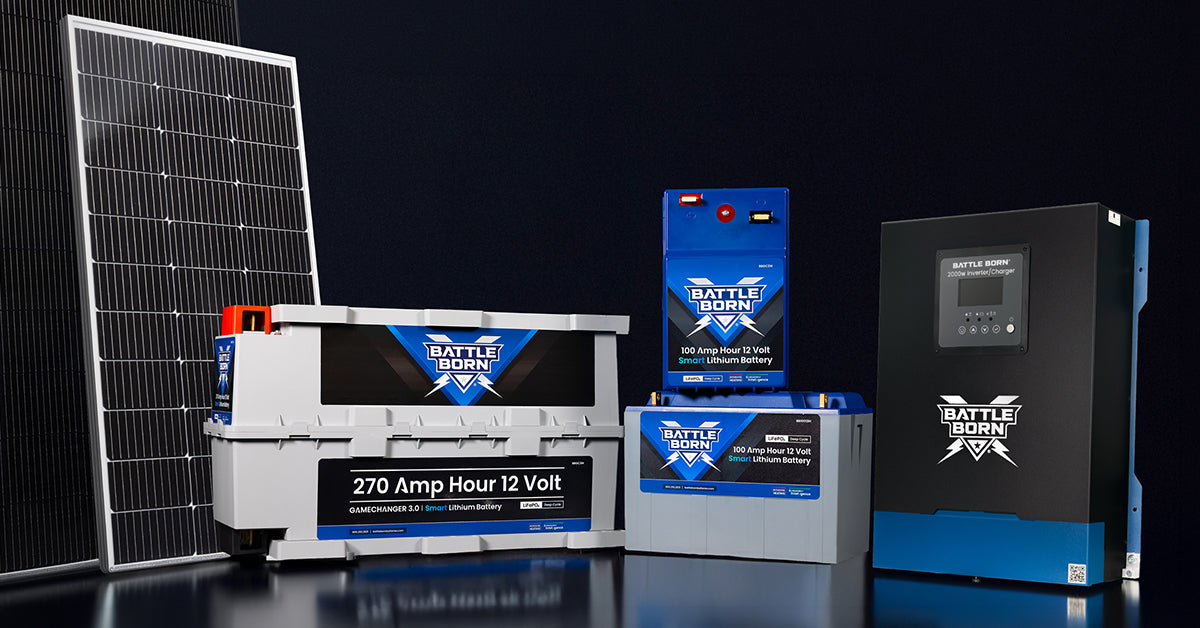
This page focuses on lithium battery-based off-grid power solutions and is most valuable for understanding how battery storage supports real-world resilience applications. It explains that LiFePO4 battery systems store solar energy and deliver stable electricity for lighting, appliances, communications, and essential household loads. That makes the page relevant not just to solar buyers, but also to people designing backup power for critical daily functions where voltage stability and reliable discharge performance matter.
A practical strength of the source is its emphasis on converting stored battery power into usable electricity for outlets, appliances, and other household loads. This is the central function of an off-grid electrical system: generation alone is not enough unless storage and power conversion are properly integrated. For homesteads, remote cabins, or emergency-preparedness installations, this kind of battery-centric architecture is often what determines whether the system can actually support normal use after sunset or during cloudy periods.
The article is less about step-by-step installation and more about the role of batteries in a larger off-grid system, which makes it useful as a product- and architecture-oriented reference. It is especially relevant for readers comparing lithium chemistry options or evaluating whether LiFePO4 is suitable for long-cycle residential or mission-critical use. Because the page is from a battery manufacturer, it is naturally vendor-adjacent, but the content still offers concrete insight into what off-grid battery systems are expected to do in practice.
For resilience planning, the main takeaway is that off-grid solar is fundamentally a storage problem as much as a generation problem. The source helps reinforce that batteries are not optional accessories; they are the mechanism that makes solar power available when it is needed rather than only when the sun is shining. That practical distinction is central to off-grid self-sufficiency, emergency preparedness, and small-scale autonomous energy design.
Source: battlebornbatteries.com
Related Analysis
- Off-Grid Homesteaders Build Energy Systems Without Professional Help — Early signals from three documented homestead projects point to a DIY energy pattern centered on micro-hydro and natural…
- German Pilot Projects Wire Greywater Loops Into Off-Grid Settlements — Several German pilot projects are integrating decentralized greywater loops at build time. A Fraunhofer study reports 95…
Related on PermaNews
- Finnish Off-Grid: Rocket Mass Heater Performance in Greenhouse (Case Study)
- Rodale Report 2025: Thermal Mass Boost in Solar Greenhouses (Case Study)
- Earthaven Ecovillage: 30 Years Off-Grid with Hydro & Solar (Video)
- 2025: Rocket Mass Heaters in PHI-Certified Earthship Tiny Homes (Case Study)
- Off-Grid Water: Cistern Design & Sizing for Security (How-To Guide)
- Net-Zero Greenhouse Design: Year-Round Food Production via ATTRA (How-To Guide)
Explore more in Shelter, Energy & Infrastructure — the full hub for this knowledge area.