Creosote: 1300°F Burn for Peak Heating Efficiency
By paul wheaton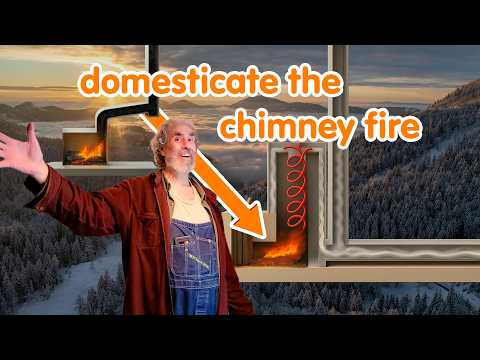
TL;DR: Creosote, often seen as a waste product, can be a highly effective fuel source when burned efficiently in wood stoves.
- Creosote burns at 1300°F, hotter than wood.
- Unburnt wood gases condense into creosote.
- Secondary combustion maximizes heat from creosote.
- Modern stoves optimize creosote burning.
- Older stoves increase creosote buildup.
Why it matters: Understanding creosote combustion can significantly improve wood stove efficiency and reduce chimney maintenance.
Do this next: Investigate your wood stove’s design for secondary combustion features.
Recommended for: Wood stove users and enthusiasts interested in optimizing heating efficiency and minimizing creosote buildup.
The article discusses the combustion properties of creosote, particularly its high burning temperature and implications for wood stoves and heating efficiency. The author emphasizes that creosote, often considered a problematic byproduct of wood burning, can actually be a valuable fuel source due to its intense heat output.
A central point is the assertion that creosote burns at approximately 1300 degrees Fahrenheit. This temperature is significantly higher than that typically achieved by burning wood alone, which usually ranges between 500 and 1100 degrees Fahrenheit, depending on the wood type and combustion conditions. The article suggests that this high burning temperature of creosote is a key factor in maximizing heat extraction from a wood stove.
The author explains that creosote is essentially unburnt wood gases that condense in cooler parts of the chimney or flue. Instead of viewing this as waste or a hazard, the perspective offered is that these condensed gases represent potential energy that can be recovered. The ideal scenario, according to the article, is to burn these gases within the stove itself, rather than allowing them to accumulate in the chimney.
To achieve this, the article implicitly advocates for stove designs and operating practices that promote secondary combustion. Secondary combustion involves introducing additional air into the stove's combustion chamber at a point where the wood gases have already been released but have not yet fully burned. This extra air, combined with high temperatures, allows the creosote-forming gases to ignite and burn efficiently, releasing their substantial heat content.
The article implies that many conventional wood stoves, especially older models, are not optimized for burning creosote effectively. These stoves might allow too much unburnt gas to escape up the chimney, leading to creosote buildup and reduced heating efficiency. Modern, high-efficiency wood stoves, often featuring secondary burn chambers or catalytic converters, are better equipped to handle these gases.
The high burning temperature of creosote has several practical implications. Firstly, it means that if creosote is burned within the stove, it contributes significantly to the overall heat output, making the stove more efficient. Secondly, it suggests that a "creosote fire" in a chimney, while dangerous due to the uncontrolled nature and potential for structural damage, is also a demonstration of the immense energy contained within this material. The goal, therefore, is to harness this energy safely and efficiently within the confines of the stove.
The article also touches upon the concept of "heat through science," implying that understanding the chemical processes of combustion, particularly the burning of wood gases, is crucial for optimizing wood stove performance. It encourages a more scientific approach to wood burning, moving beyond simply igniting wood to actively managing the combustion of all potential fuel sources, including the volatile compounds that form creosote.
In essence, the article re-frames creosote from a mere nuisance or danger to a valuable, high-energy fuel source that, when properly managed and burned, can significantly enhance the heating efficiency and output of a wood stove. The underlying message is to design and operate wood burning systems in a way that fully utilizes all the energy potential of the wood, including the gases that would otherwise condense into creosote.
Source: youtube.com
Related Analysis
- Homeowners Retrofit Properties with Renewable Energy Solutions — Renewable energy retrofitting gains traction as regenerative agriculture principles inform home upgrades. Experts point …
- New Practices Build Climate-Resilient Cob Homes — Cob construction emerges as a key strategy in enhancing resilience against ecological challenges in permaculture systems…
Related on PermaNews
Explore more in Shelter, Energy & Infrastructure — the full hub for this knowledge area.