Cows & Land: Reassessing Their Environmental Impact
By Gunnar Rundgren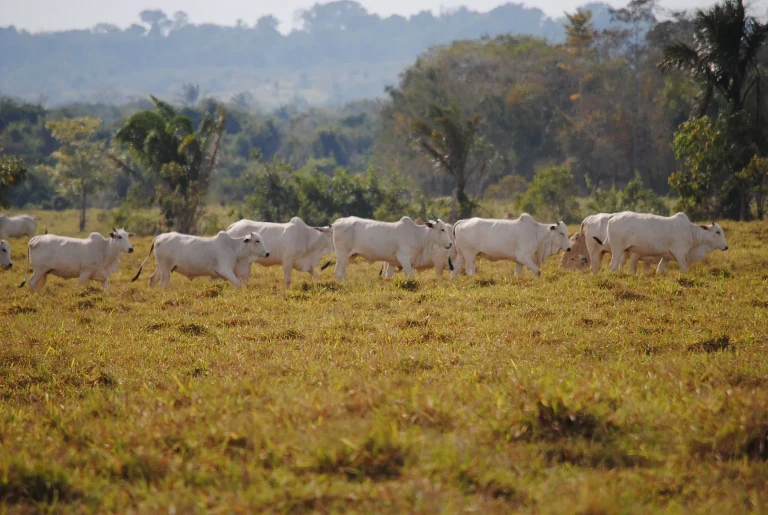
TL;DR: Holistic grazing practices can restore degraded land and support biodiversity, contrasting with the negative impacts of industrial animal agriculture and monoculture cropping.
- Ruminants historically boosted ecosystem health.
- Industrial livestock farming causes environmental harm.
- Monoculture cropping also degrades environment.
- Sustainable animal integration benefits soil.
- Rethink agriculture for ecosystem restoration.
Why it matters: Understanding the nuanced impact of agriculture is crucial for developing sustainable food systems and healing degraded environments.
Do this next: Research local regenerative farms practicing holistic grazing to understand their methods and impact.
Recommended for: Anyone interested in sustainable agriculture, land restoration, and the ecological role of animals.
The discussion surrounding the environmental impact of agriculture often simplifies the relationship between plants, animals, and land, frequently portraying plants as inherently beneficial and animals as detrimental. While industrial animal agriculture undeniably presents significant environmental challenges, it's crucial to recognize that large-scale crop production also carries its own set of substantial issues. A more nuanced understanding reveals that the problem isn't simply the presence of animals, but rather the methods and scale of their integration into agricultural systems.
Historically, ruminant animals, such as cows, played a vital role in maintaining healthy ecosystems. Before widespread human intervention, vast herds of herbivores roamed grasslands, their grazing patterns and waste contributing to soil fertility, seed dispersal, and the prevention of ecological succession that could lead to less diverse landscapes. This natural interaction fostered robust and resilient ecosystems. However, modern industrial livestock operations often deviate significantly from these natural processes. Confining large numbers of animals in small areas, feeding them monoculture crops grown with synthetic fertilizers and pesticides, and managing their waste in concentrated lagoons creates a host of environmental problems, including greenhouse gas emissions, water pollution, and soil degradation.
Conversely, industrial crop production, while often presented as a more environmentally friendly alternative, also has a profound impact. The reliance on monocultures depletes soil nutrients, necessitating the heavy use of synthetic fertilizers, which can lead to runoff and eutrophication of waterways. Pesticides and herbicides, while designed to protect crops, can harm beneficial insects, disrupt ecosystems, and contaminate water sources. Tillage practices, common in conventional agriculture, disturb soil structure, release carbon into the atmosphere, and increase erosion. Furthermore, the vast tracts of land dedicated to growing feed for industrial livestock often involve the conversion of natural habitats, leading to biodiversity loss.
The key distinction lies not in the existence of animals or plants in an agricultural system, but in how they are managed. Regenerative agricultural practices offer a compelling alternative to both industrial livestock and crop production. These methods emphasize working with natural processes to build soil health, enhance biodiversity, and improve water cycles. For instance, managed rotational grazing, where livestock are moved frequently across pastures, mimics the natural grazing patterns of wild herbivores. This practice allows pastures to recover, stimulates plant growth, sequesters carbon in the soil, and improves water infiltration. The animals' waste is naturally distributed, fertilizing the soil without the need for synthetic inputs.
Similarly, regenerative crop production focuses on minimizing soil disturbance, planting cover crops, and integrating diverse rotations. These practices enhance soil organic matter, reduce erosion, improve water retention, and decrease the need for synthetic fertilizers and pesticides. When livestock are integrated into these systems, they can play a beneficial role, for example, by grazing cover crops or consuming crop residues, further contributing to nutrient cycling and weed control.
Therefore, the simplistic dichotomy of "plants good, animals bad" fails to capture the complexities of agricultural sustainability. A more accurate perspective acknowledges that both plant and animal agriculture, when practiced industrially, can have significant negative environmental consequences. The path towards a more sustainable food system lies in adopting regenerative approaches that prioritize ecological health, whether through thoughtfully managed livestock, diverse cropping systems, or, ideally, an integrated approach that leverages the synergistic benefits of both. The focus should shift from demonizing entire categories of food production to promoting practices that foster ecological resilience and long-term productivity.