Hand-Built: 26 No-Dig Market Garden Beds From Scratch
By Self Sufficient CJ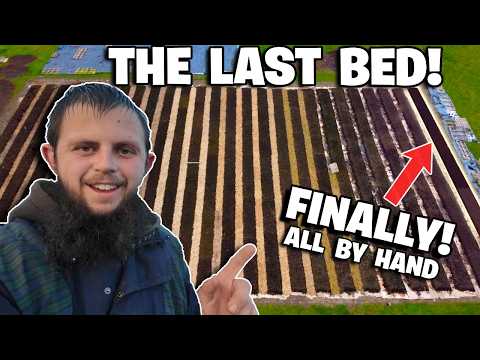
TL;DR: Establishing large no-dig garden beds by hand requires significant effort in land preparation and strategic layering of organic materials.
- No-dig gardening builds soil fertility without tilling.
- Cardboard suppresses weeds and adds carbon to soil.
- Wood chips retain moisture and provide slow-release nutrients.
- Compost offers immediate nutrients and microbial diversity.
Why it matters: No-dig methods enhance soil health and long-term garden productivity, reducing the need for intensive labor once established.
Do this next: Watch the video to see the full process of building the no-dig beds by hand.
Recommended for: Market gardeners and serious home growers interested in establishing highly productive, no-dig garden systems from raw land.
The article details the extensive process of establishing 26 large no-dig market garden beds entirely by hand, emphasizing the significant physical effort and strategic planning involved in such an undertaking. The project began with the initial preparation of the chosen area, which involved clearing existing vegetation and ensuring a relatively level surface for the beds. This foundational step was crucial for the long-term success and ease of management of the garden.
A key aspect of the no-dig methodology employed was the layering of various organic materials. This approach aims to build soil fertility and structure over time without disturbing the soil ecosystem through tilling. The first layer applied to the cleared ground was a substantial amount of cardboard. This served multiple purposes: it suppressed weeds by blocking light, provided a carbon source for soil organisms, and created a barrier that would eventually break down, adding organic matter to the soil. The cardboard was carefully laid out, ensuring significant overlap to prevent weeds from growing through the seams.
Following the cardboard, a thick layer of wood chips was introduced. These wood chips, sourced locally, contributed to the carbon content of the beds and helped retain moisture. They also acted as a slow-release nutrient source as they decomposed. The article highlights the logistical challenge of acquiring and transporting such a large volume of wood chips, underscoring the scale of the project.
The next critical component was the addition of a significant quantity of compost. This was arguably the most vital layer, as it provided the immediate nutrient boost necessary for plant growth and introduced a rich microbial community to the new beds. The compost was spread evenly over the wood chips, creating a fertile growing medium. The quality and source of the compost were important considerations, with an emphasis on using well-rotted, nutrient-dense material.
Finally, a top layer of soil was added to each bed. This layer, while not as thick as the compost, provided a fine-textured medium for direct seeding and transplanting, ensuring good seed-to-soil contact and optimal conditions for young plants. The combination of these layers – cardboard, wood chips, compost, and soil – created a deep, rich, and biologically active growing environment designed to support a wide variety of market garden crops.
Throughout the entire process, the article stresses the manual labor involved. Every piece of cardboard, every scoop of wood chips, every shovelful of compost, and every handful of soil was moved and placed by hand. This hands-on approach, while physically demanding, allowed for meticulous attention to detail and a deep understanding of the evolving soil structure. The sheer volume of materials moved and the repetitive nature of the tasks highlight the dedication required for such a large-scale, no-dig garden establishment. The project serves as a testament to the effectiveness of no-dig principles in creating productive and sustainable growing spaces, even when executed on a significant scale without the aid of heavy machinery.