Enhancing Resilience in Sub-Saharan Africa with Off-Grid Tech
PermaNews Brief
Key Takeaways
Off-grid appliances enhance resilience in low-income communities facing climate challenges.
- Off-grid appliances aid daily life during climate crises.
- Specific devices enhance water, food, and medical access.
- Rural areas experience severe climate impacts and infrastructure deficits.
- Tailoring solutions to local needs promotes effective resilience.
- Energy-efficient technologies are critical for adaptation and recovery.
Why It Matters
Improving resilience in low-income regions is crucial for survival during climate stress, ensuring continuity of essential services.
What to Do Next
Explore local off-grid solutions that meet community needs.
Permaculture Context
For permaculture designers and regenerative practitioners working in or alongside low-income communities, this research validates something the movement has long intuited but rarely quantified: appropriate technology, scaled to actual household and community needs, is the functional infrastructure of resilience. The significance here extends beyond electrification advocacy. When a solar-powered grain mill reduces hours of manual labor, it frees time for soil work, seed saving, and community organizing. When refrigeration becomes reliable, it makes fermentation, medicinal herb storage, and food preservation genuinely viable at the homestead scale. What the report implicitly surfaces is a design principle permaculture practitioners already hold: resilience is not built through grand systems but through layered, redundant, human-scaled functions that continue working when larger systems fail. The practical implication is clear. If you are designing a homestead, a community food hub, or supporting a cooperative in a climate-vulnerable region, prioritizing energy-independent appliances that serve multiple functions — cooling, processing, pumping — is not a luxury upgrade. It is foundational infrastructure, and it belongs in your zone planning from the start.
Recommended for: Development practitioners interested in sustainable energy solutions.
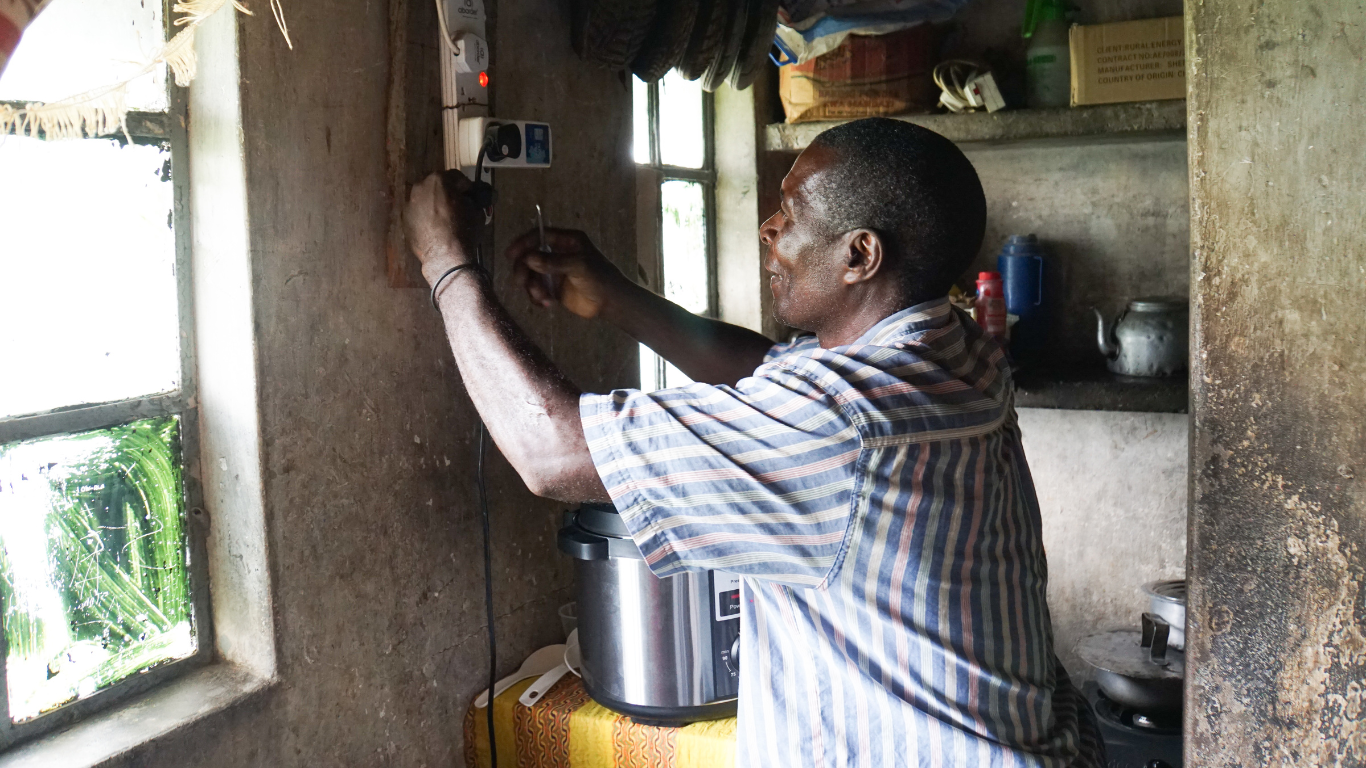
This report examines how off-grid solar products and energy-efficient appliances contribute to resilience in low-income communities, with a specific focus on sub-Saharan Africa. It is useful because it goes beyond generic advocacy and identifies concrete device categories and use cases that matter in daily life during climate stress, shocks, and service interruptions. The report frames resilience in relation to climate change and disaster exposure, noting that rural communities often face the hardest impacts while also having the weakest infrastructure and least access to backup resources. Within that context, it evaluates the role of seven off-grid solar products and equipment types: electric pressure cookers, fans, motorbikes, refrigerators, televisions, water pumps, grain mills, and solar PV systems. The practical value of the report is that it links these devices to specific resilience outcomes rather than treating electrification as an abstract development goal. For example, solar-powered pumping supports water access, refrigeration supports food and medicine storage, grain mills reduce labor and improve food processing, and solar PV systems provide the backbone for multiple household and community services. The report’s emphasis on low-income and rural communities makes it especially relevant for off-grid resilience work in the Global South, where the ability to keep essential services functioning during climate-related disruptions can determine whether households cope, recover, or fall further behind. The source also makes clear that energy-efficient off-grid appliances are not just convenience technologies; they are part of adaptation and resilience infrastructure. For practitioners, the report suggests a field-oriented way to think about systems design: choose devices according to local needs, disaster exposure, and service continuity requirements. In practical terms, this means planning off-grid deployments around productive use, household wellbeing, and essential services rather than only around lighting and phone charging. The document is therefore valuable for program designers, implementers, and researchers seeking evidence that links off-grid energy access to resilience outcomes in rural African contexts.
Source: efficiencyforaccess.org
Related Analysis
- Regenwasser nutzen: 5 Wege, was sie wirklich kosten – und die Rechtslage, die viele übersehen — Regenwassernutzung ist in Deutschland Mainstream – von der Regentonne bis zur Erd-Zisterne. Wir zeigen fünf Wege vom Gar…
- Water-Harvesting Swales: What They Cost, Where Practitioners Agree — and the One Real Safety Debate — Swales — level, on-contour ditches that slow, spread and sink rainwater into the soil — are a foundational permaculture …
Related on PermaNews
- Finnish Off-Grid: Rocket Mass Heater Performance in Greenhouse (Case Study)
- Designing Regenerative Resilience: Participatory Living Labs (How-To Guide)
- Rodale Report 2025: Thermal Mass Boost in Solar Greenhouses (Case Study)
- Earthaven Ecovillage: 30 Years Off-Grid with Hydro & Solar (Video)
- Amazonas: Chakra Waldgärten – Dynamische Agroforst-Wunder (Case Study)
- Nagaland's Jhum-Alder Agroforestry: Climate-Smart Farming (Article)
Explore more in Water, Climate & Adaptation — the full hub for this knowledge area.