Organic No-Till: Weed Control Minus Synthetic Inputs
By Rodale Institute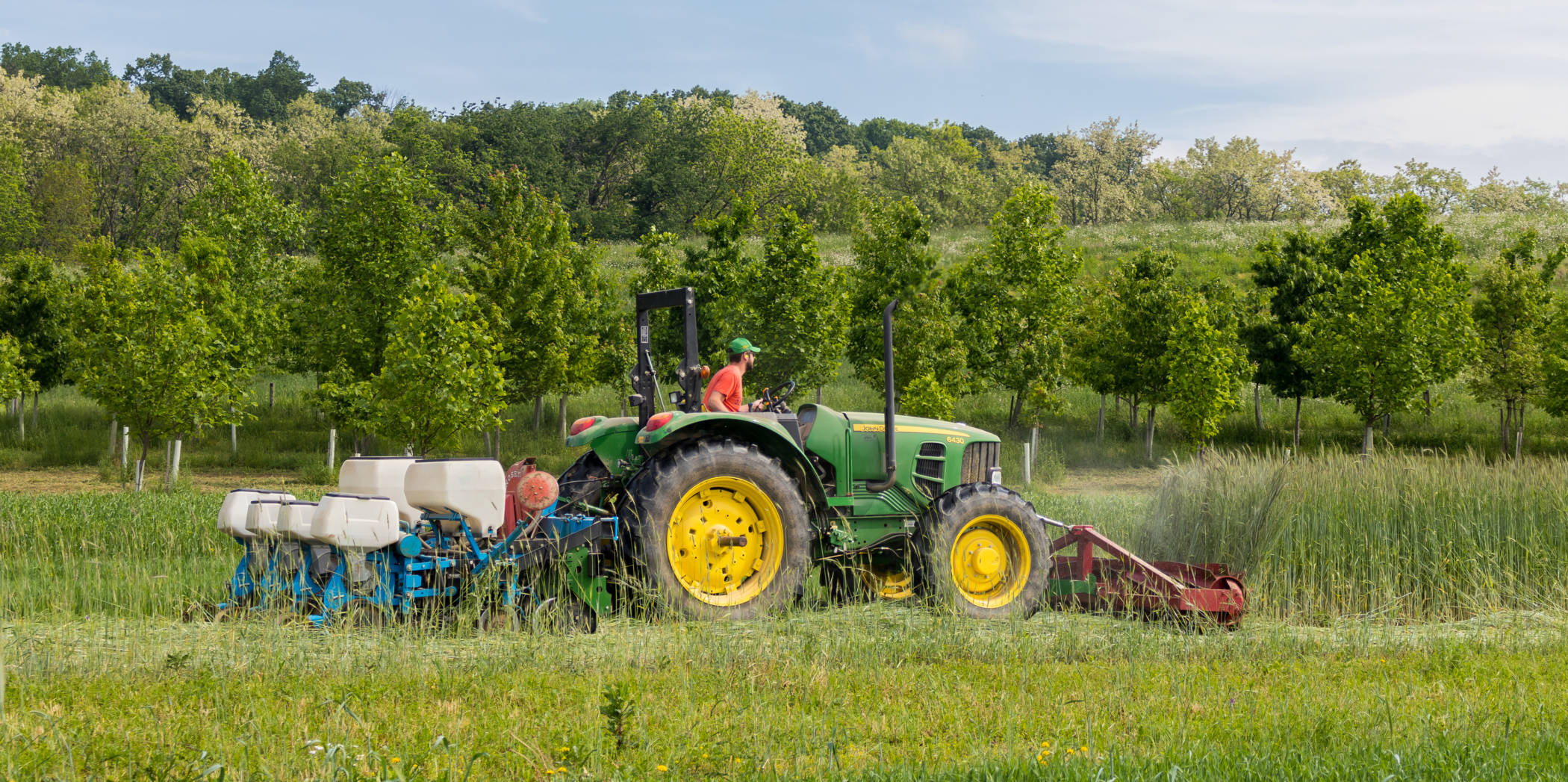
PermaNews Brief
Key Takeaways
Organic no-till farming uses non-chemical methods like cover crop termination to manage weeds and improve soil health.
- No-till farming avoids synthetic herbicides.
- Cover crops are flattened to suppress weeds.
- Roller-crimpers are used for large-scale operations.
- Small farms can use hand tools for weed control.
- Integrated approach saves time and energy.
Why It Matters
Organic no-till offers a sustainable way to control weeds, enhance soil health, and reduce reliance on synthetic chemicals, benefiting both the environment and farm productivity.
What to Do Next
Research appropriate cover crop species for your local climate and farming goals.
Recommended for: Farmers and gardeners seeking sustainable, chemical-free weed management and soil improvement strategies.
Organic no-till farming represents a distinct approach to conservation agriculture that eliminates synthetic herbicides while maintaining soil protection benefits. Unlike conventional no-till systems that rely on chemical herbicides to terminate cover crops before planting, organic no-till uses exclusively non-synthetic methods for weed management and cover crop termination.
Small-scale organic no-till operations utilize hand tools such as hoes and rakes for cover crop management and weed suppression. Large-scale organic no-till farmers employ the roller-crimper, a specialized tractor implement invented at Rodale Institute that mechanically terminates cover crops without chemical inputs. The roller-crimper operates by flattening cover crop biomass in a controlled manner, creating a mulch layer that suppresses subsequent weed growth.
The operational sequence involves a single tractor pass where the roller-crimper terminates the cover crop, and implements on the rear of the tractor part the cover crop mat, drop seeds (such as soybeans or corn), and cover them to ensure soil contact. This integrated approach saves significant time and energy compared to multiple cultivation passes. The cash crop then grows directly through the cover crop mulch, which provides multiple benefits including weed suppression, soil moisture retention, temperature moderation, and organic matter addition.
Organic no-till systems utilize cover crops as the primary mechanism for weed management and soil health improvement. The cover crop biomass serves as a physical and biological barrier to weed emergence while adding organic matter and nitrogen (when legume-based) to the soil. This approach eliminates the need for synthetic herbicides while maintaining the soil protection and erosion reduction benefits associated with no-till systems. The method is scalable from small diversified farms to larger grain operations, making it adaptable to various farm sizes and crop types.
Source: rodaleinstitute.org
Related Analysis
- Composting Advice Shifts From Chemistry to Microbial Biology — Several sources suggest composting guidance is pivoting from nutrient ratios toward microbial ecology—reframing what "go…
- Does Growing Your Own Food Actually Save Money? The Real Numbers — Most home gardens save money by year two — but only if the right crops are planted. Herbs and salad greens deliver 5–10x…
Related on PermaNews
- Regenerative Farming: Cultivating Healthy Soil & Biodiversity (How-To Guide)
- Rodale Institute: Soil Health Principles for Regenerative Ag (How-To Guide)
- Boost Soil Health: Permaculture's Regenerative Methods (How-To Guide)
- Episode 180: Shifting Management Logistics to Build a Better Lifestyle with Tom Cotter (Podcast)
- Boost Crop Yields: Free Soil Health Academy Methods (How-To Guide)
- Regenerative Farming: Grow Food, Heal Earth with Pitaya Foods (How-To Guide)
Explore more in Food Systems & Growing — the full hub for this knowledge area.