Microbial Power: Water Kefir, EM-1, Biochar Soil Test
By Matt Powers - Regenerative Soil & Permaculture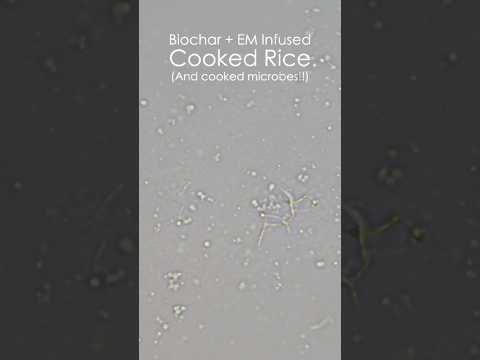
TL;DR: Microscopic analysis reveals how different amendments—kefir, EM-1, and biochar mixes—impact soil microbial diversity for healthier soil.
- Extended fermentation boosts microbial diversity in water kefir.
- EM-1 consistently delivers robust bacterial populations.
- Biochar with EM and rice inoculates beneficial microbes.
- Fungi presence increases with longer fermentation and biochar.
- Different amendments foster distinct microbial communities.
- Microscopic review is key to assessing soil inoculants.
Why it matters: Understanding the microbial profile of soil amendments helps target specific soil health goals, whether promoting bacterial growth or fungal networks.
Do this next: Consider extending fermentation for water kefir to increase fungal diversity.
Recommended for: Gardeners and soil enthusiasts interested in deepening their understanding of microbial soil amendments through observation.
This article details an experiment comparing the microbial activity and diversity of various soil amendments: fresh water kefir, fermented water kefir, extended EM-1, and a combination of EM-1, biochar, and rice. The primary goal was to assess which amendment offered the most beneficial microbial profile for soil health, particularly focusing on the presence of fungi and bacteria.
The experiment began with the preparation of the different solutions. Fresh water kefir was prepared by culturing kefir grains in sugar water for 24 hours. A portion of this was then allowed to ferment further for an extended period to create the fermented water kefir. The extended EM-1 was prepared by diluting the commercial EM-1 concentrate with molasses and water, then allowing it to ferment for several days. The final amendment involved combining EM-1 with biochar and rice, a method intended to inoculate the biochar with beneficial microbes and provide a food source for them.
Each amendment was then observed under a microscope, and the findings were meticulously documented. The fresh water kefir showed a good presence of bacteria, characterized by their active movement and varied shapes. However, fungal hyphae were less prominent, suggesting a bacterial dominance in this initial stage of fermentation. The fermented water kefir, having undergone a longer fermentation period, exhibited a more diverse microbial community. There was an increase in the variety of bacterial forms, and importantly, a noticeable rise in fungal structures, including some nascent hyphae. This indicated that extended fermentation encouraged a broader spectrum of microbial life, moving beyond a purely bacterial environment.
The extended EM-1 solution presented a robust and active bacterial population. The sheer number and vitality of the bacteria were striking, demonstrating the effectiveness of the EM-1 formulation in promoting bacterial growth. While bacteria were abundant, the presence of fungi was still relatively low compared to the fermented water kefir. This observation suggested that while EM-1 is excellent for bacterial proliferation, it might not be as effective in directly fostering a diverse fungal community on its own.
The most intriguing results came from the EM+Biochar+Rice amendment. This mixture displayed a significantly higher level of microbial diversity and activity. The biochar, with its porous structure, provided an ideal habitat for microbes, and the rice served as a nutrient source. Under the microscope, this sample revealed a thriving ecosystem of both bacteria and fungi. There were numerous active bacteria, and critically, a much greater abundance of fungal hyphae, some of which were quite extensive. The interaction between the EM-1, biochar, and rice appeared to create a synergistic effect, promoting a balanced and diverse microbial community that included a strong fungal component. This finding is particularly relevant for permaculture and regenerative agriculture, as a healthy soil ecosystem relies heavily on a robust fungal network for nutrient cycling and soil structure.
In conclusion, the experiment highlighted the distinct microbial profiles of each amendment. While fresh water kefir and extended EM-1 were effective in promoting bacterial growth, the fermented water kefir showed an improvement in fungal presence with extended fermentation. However, the combination of EM-1, biochar, and rice emerged as the most promising amendment for fostering a diverse and active microbial community, particularly in its ability to support both bacterial and fungal populations. This suggests that incorporating biochar and a food source like rice with microbial inoculants can significantly enhance the microbial richness of soil amendments, offering a more comprehensive approach to soil health improvement.
Source: youtube.com
Related Analysis
- Farmers Convert Six Weeks of Rhubarb Into 25-Year Supply — Initial signals suggest a rhubarb preservation technique can extend a brief seasonal harvest into 25 years of storage—a …
- Compost Builds Soil Microbiomes—But Human Waste Divides Practitioners — A small but consistent set of signals indicates composting's soil benefits are well-documented, while human-waste compos…
Related on PermaNews
- Soil Health Secret: Fix Soil Forever With This One Amendmen (Video)
- Permakultur & Kohlenstoff-Speicherung: Workshop 2025 (Event)
- Kaffee-Biochar: Nachhaltige Ernte, Boden & Klima schützen (How-To Guide)
- Hof Bergmann: Pflanzenkohle für Klimaschutz & Boden (Case Study)
- ¿Qué es el Biochar? El carbón que puede transformar la fertilidad tu suelo por siglos (Video)
- Can You Use Woodstove Charcoal as Biochar + Going From Compacted Dirt to Thriving Soil (Video)
Explore more in Food Systems & Growing — the full hub for this knowledge area.