Homestead and Farm Resiliency: Adaptive Land and Infrastructure Systems
By Ben Falk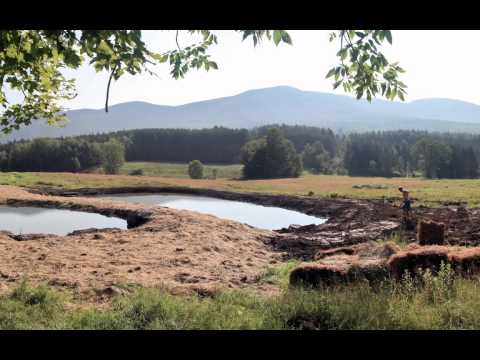
This video is a substantive talk on homestead and farm resilience, with a strong emphasis on designing land and infrastructure as an integrated system rather than a set of disconnected activities. The speaker explains that a resilient homestead does not simply grow one crop in one area and keep animals somewhere else; instead, the goal is to overlay functions so that perennial crops, grazing systems, water capture, and energy use all reinforce each other. The talk’s value is in showing how adaptive design can improve productivity while also reducing vulnerability to drought, weather swings, and land degradation.
A major theme is land repair. Rather than viewing farmland as a static platform for production, the video treats it as a living system that can be improved through careful management. The speaker discusses integrating perennial cropping with grazing, which is a practical strategy because livestock can be used to cycle nutrients, manage vegetation, and support soil health when movement and timing are managed well. The explanation also stresses the need to harvest as much solar energy and rainfall as possible. In practical terms, that means shaping land and infrastructure so that water is slowed, spread, and stored, and so plant communities can capture and convert that energy into useful biomass, food, and ecological function.
The content appears to be especially useful for land stewards who want to move beyond conventional monoculture or single-use thinking. It suggests that resilience comes from stacking functions: water management supports plant growth, plant diversity supports grazing, grazing supports nutrient cycling, and all of it contributes to better land repair over time. The video also implies that infrastructure decisions should be made in relation to ecological goals, not separated from them. This makes it relevant for people considering fencing, pasture rotation, perennial plantings, and site-level water design.
Overall, the talk is a case-oriented explanation of adaptive farm planning that goes beyond motivational language. It gives viewers a framework for understanding how regenerative systems are built: by combining perennial cropping, grazing, water harvesting, and infrastructure design into one coherent strategy that aims to increase resilience and ecological function together.
Source: youtube.com
Related Analysis
- Regenerative Farmers Flip Cover Crop Logic From Compliance to Profit — Practitioner accounts and a new meta-analysis suggest cover cropping is being reframed from conservation practice to pro…
- Farmers Convert Six Weeks of Rhubarb Into 25-Year Supply — Initial signals suggest a rhubarb preservation technique can extend a brief seasonal harvest into 25 years of storage—a …
Related on PermaNews
- Berlins schwimmende Gärten: Permakultur auf dem Wasser (Case Study)
- Finca Bellavista: Costa Rica's 200-Acre Water System Innovation (Case Study)
- Priya's 2024 India Report: 10-Hectare Water Harvesting Success (Case Study)
- Borneo's Rainforest Revival: Dr. Smits' Sugar Palm Village Hub (Case Study)
- Holmgren's 40 Yrs: Abundant Permaculture Design Webinar 3 (Video)
- Water Cycle Restoration Research: Indigenous Wisdom Meets Permaculture (Article)
Explore more in Food Systems & Growing — the full hub for this knowledge area.