Winter Che Tree Pruning: A Permaculture Perspective
By Great Escape Farms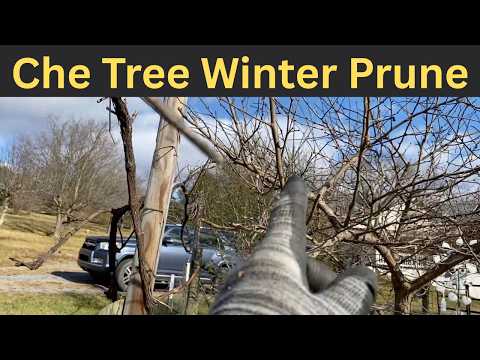
PermaNews Brief
Key Takeaways
Winter pruning of Che trees optimizes fruit production, manages size, and enhances tree health by improving light and air circulation.
- Prune Che trees in winter for best results.
- Manage Che tree size for easy harvesting.
- Improve air and light in canopy.
- Remove suckers and weak growth.
- Promote healthier fruit development.
Why It Matters
Proper winter pruning of Che trees ensures a more prolific harvest and contributes to the tree's long-term vitality, making fruit accessible and minimizing disease.
What to Do Next
Watch the video to see detailed techniques for winter pruning Che trees.
Recommended for: Home gardeners and permaculture enthusiasts looking to optimize their Che tree’s health and fruit production.
The article discusses the winter pruning of Che trees, a fruit-bearing plant known for its resilience and unique fruit. Che trees, scientifically known as *Maclura tricuspidata*, are native to East Asia and have gained some popularity in permaculture and home orchards due to their adaptability to various climates and soil conditions. They are often grown for their sweet, mulberry-like fruit, which ripens in late summer or early fall.
The primary focus of the article is on the techniques and rationale behind pruning Che trees during their dormant winter period. Winter pruning is generally preferred for deciduous fruit trees because the absence of leaves allows for a clearer view of the tree's structure, making it easier to identify branches that need removal or shaping. This timing also minimizes stress on the tree, as it is not actively growing or producing fruit.
One of the main objectives of pruning Che trees is to manage their size and shape. Che trees can grow quite large if left unpruned, potentially reaching heights that make fruit harvesting difficult. Regular pruning helps maintain a more manageable size, often aiming for a height that allows for easy access to the fruit. This is particularly important for home gardeners who may not have specialized equipment for reaching high branches.
Another crucial aspect of winter pruning is to improve air circulation and light penetration within the tree canopy. Dense canopies can create environments conducive to fungal diseases and pests. By removing crossing branches, dead wood, and weak growth, the tree's interior receives more sunlight and airflow, which can significantly reduce the incidence of disease and promote healthier growth. This also ensures that more of the fruit-bearing wood receives adequate light, leading to better fruit development and ripening.
The article also touches upon the importance of removing suckers and water sprouts. Suckers are shoots that emerge from the base of the tree or from the root system, while water sprouts are vigorous, upright shoots that grow from latent buds on older wood. Both types of growth are generally undesirable as they divert energy from fruit production and can contribute to a dense, unproductive canopy. Removing them during winter pruning helps direct the tree's energy towards more productive branches.
When it comes to specific pruning cuts, the article implicitly suggests using clean, sharp tools to make precise cuts. This minimizes damage to the tree and promotes faster healing, reducing the risk of disease entry. The general principle is to remove branches that are dead, diseased, damaged, or crossing. Additionally, some thinning of overcrowded branches may be necessary to open up the canopy. The article emphasizes the importance of understanding the tree's natural growth habit to make informed pruning decisions.
For Che trees, which can sometimes have a somewhat sprawling or bushy growth habit, pruning can also be used to encourage a more upright and open structure, which is beneficial for fruit production and overall tree health. The article implies that a well-pruned Che tree will not only be more productive but also more aesthetically pleasing in a garden or orchard setting.
In summary, the article provides a comprehensive overview of winter pruning practices for Che trees, highlighting its importance for managing tree size, improving canopy health, enhancing fruit production, and maintaining the overall vigor of the plant. It underscores the benefits of performing this task during the dormant season, emphasizing the practical advantages for both the gardener and the tree.
Source: youtube.com
Related Analysis
- Baltimore Researchers Reject Yield as Urban Farm Success Metric — Several sources suggest urban agriculture is being recast from food supplement to food sovereignty tool, with peer-revie…
- Urban Food Forest Tours Signal Shift From Passive Gardens — Several initiatives indicate urban food forests are evolving into hands-on design and education hubs — distinct from con…
Related on PermaNews
- Ernst Götsch's Cacao Syntropy: Master Agroforestry Now (How-To Guide)
- Finnish Off-Grid: Rocket Mass Heater Performance in Greenhouse (Case Study)
- Berlins schwimmende Gärten: Permakultur auf dem Wasser (Case Study)
- Rodale Report 2025: Thermal Mass Boost in Solar Greenhouses (Case Study)
- AUTarcaMatricultura La Palma: Permakultur & Energieautarkie (How-To Guide)
- Earthaven Ecovillage: 30 Years Off-Grid with Hydro & Solar (Video)
Explore more in Food Systems & Growing — the full hub for this knowledge area.