8-Minute Guide: 12 Rocket Mass Heater Builds & Designs
By paul wheaton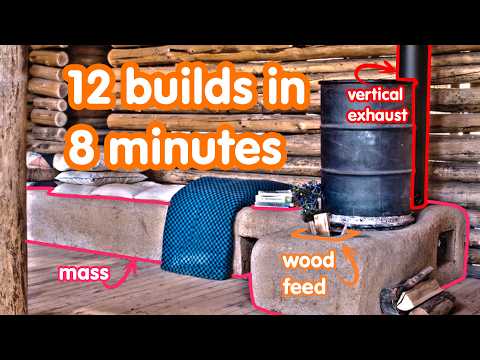
TL;DR: Rocket mass heaters offer diverse, efficient, and adaptable heating solutions for various spaces and functions by combining combustion with thermal mass.
- Rocket mass heaters combine efficient combustion with thermal mass.
- Designs range from compact units to elaborate integrated systems.
- Thermal mass can create heated seating, beds, or walls.
- Flue designs vary to optimize heat distribution.
- Insulated heat risers are crucial for complete combustion.
Why it matters: Rocket mass heaters provide a sustainable and efficient alternative to conventional heating, significantly reducing fuel consumption and offering prolonged warmth even after the fire extinguishes.
Do this next: Explore different rocket mass heater designs to understand their internal structures and operational principles for your specific heating needs.
Recommended for: Those seeking efficient and sustainable heating solutions, particularly individuals interested in off-grid living, permaculture, or DIY projects.
This article provides a concise overview of twelve distinct rocket mass heater designs, presented with visual overlays to highlight their internal structures and operational principles. The primary focus is on demonstrating the versatility and adaptability of this heating technology, which combines efficient combustion with thermal mass for sustained warmth.
The designs showcase a range of configurations, from relatively simple, compact units suitable for smaller spaces to more elaborate systems integrated into larger structures or serving multiple functions. A recurring theme across many designs is the incorporation of a combustion chamber where wood is burned efficiently at high temperatures, followed by a heat riser that directs the hot gases into a heat exchange system. This system typically consists of long, winding flues embedded within a thermal mass, such as cob, brick, or stone.
Several examples illustrate how the thermal mass can be shaped to create comfortable seating areas, beds, or even entire walls that radiate warmth for extended periods after the fire has died down. One design, for instance, features a bench-style mass that doubles as a heated seating surface, while another integrates the heater into a bed platform, providing radiant heat directly to the sleeping area. The visual overlays effectively deconstruct these designs, revealing the pathways of hot gases and the strategic placement of the thermal mass.
The article also touches upon variations in flue design, with some systems employing a single, continuous serpentine path through the thermal mass, while others utilize multiple parallel flues to distribute heat more evenly. The importance of an insulated heat riser is subtly emphasized in several designs, as this component is crucial for achieving complete combustion and minimizing creosote buildup.
Beyond basic heating, some designs demonstrate how rocket mass heaters can be adapted for cooking or water heating. One example shows a cooking surface integrated directly above the combustion chamber, leveraging the intense heat for culinary purposes. While not explicitly detailed, the visual cues suggest the potential for incorporating heat exchangers for domestic hot water production within the thermal mass.
The diversity of materials used for the thermal mass is also evident, ranging from traditional cob and earth-based mixtures to more conventional brick and stone. This highlights the DIY-friendly nature of rocket mass heaters and their potential to be constructed using readily available or reclaimed materials. The article implicitly suggests that the choice of material can influence both the heat retention properties and the aesthetic integration of the heater into a living space.
Overall, the presentation serves as a rapid-fire visual catalog of rocket mass heater possibilities, emphasizing their core principles of efficient combustion and thermal mass utilization. It provides a foundational understanding of how these systems are designed and how they can be customized to meet various heating and functional needs within a permaculture context. The visual nature of the presentation allows for quick comprehension of the internal workings and external forms of these innovative heating solutions.
Source: youtube.com
Related Analysis
- Homeowners Retrofit Properties with Renewable Energy Solutions — Renewable energy retrofitting gains traction as regenerative agriculture principles inform home upgrades. Experts point …
- New Practices Build Climate-Resilient Cob Homes — Cob construction emerges as a key strategy in enhancing resilience against ecological challenges in permaculture systems…
Related on PermaNews
- Extreme Cold Home Heating: Minus 100°F Survival Guide, Pt. 1 (How-To Guide)
- Extreme Cold: Heating Your Home at -100°F During a Storm (Video)
- Rocket Mass Heater: Efficient, Low-Emission Heating Explained (Video)
- Raketenofen: 24h Wärme mit 1h Feuer – Low-Tech Effizienz (Video)
- Winter Wood Prep: Splitting Logs for Optimal Home Heat (Video)
- DIY Rocket Mass Heaters: Efficient Wood Heat Trailer (Video)
Explore more in Shelter, Energy & Infrastructure — the full hub for this knowledge area.