Tiny House Solar Roof: Integrated Off-Grid Power Innovation
By Exploring Alternatives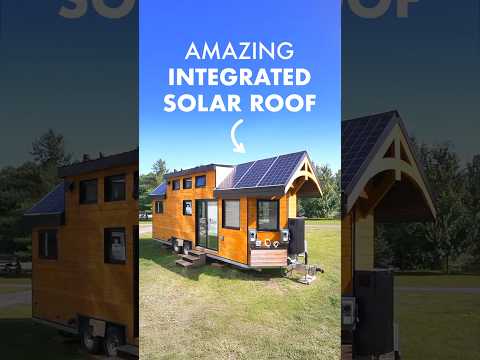
TL;DR: A tiny house integrates solar shingles directly into its roof, offering both power generation and weather protection for off-grid living.
- Solar shingles replace traditional roofing materials.
- System generates 3.6 kW, ample for a tiny home.
- 14.4 kWh battery bank provides significant energy reserve.
- Integrated design offers clean aesthetics and dual function.
- Potential for simplified construction, reduced material costs.
Why it matters: This integrated solar roofing solution offers a promising direction for sustainable, off-grid housing by combining energy generation with essential building functionality and aesthetics.
Do this next: Explore integrated solar shingle products for small-scale off-grid applications.
Recommended for: Tiny home builders, off-grid enthusiasts, and those looking for aesthetically pleasing integrated solar solutions.
This video showcases an innovative solar roof system designed for a tiny house, emphasizing its integrated and aesthetically pleasing approach to off-grid living. The primary focus is on a unique solar shingle product that seamlessly blends with the roof's structure, offering both power generation and weather protection without the typical appearance of bulky solar panels.
The tiny house, which is approximately 20 feet long, features a roof entirely covered with these solar shingles. Unlike conventional solar installations where panels are mounted on top of existing roofing materials, these shingles *are* the roofing material. This design choice contributes significantly to the house's clean lines and modern aesthetic, making the solar array almost indistinguishable from a standard roof at first glance. The shingles are dark in color, further aiding their integration.
A key advantage highlighted is the dual functionality of these shingles. They serve as the primary weather barrier, protecting the house from rain, snow, and wind, while simultaneously converting sunlight into electricity. This eliminates the need for a separate roofing layer underneath the solar panels, potentially simplifying construction and reducing material costs in some scenarios.
The video details the power generation capabilities of this system. The entire roof is equipped with these solar shingles, generating a substantial amount of electricity. Specifically, the system is rated at 3.6 kilowatts (kW). This capacity is considered ample for a tiny house, allowing it to operate entirely off the grid. The generated power is fed into a battery bank, which stores the energy for use during periods of low sunlight or at night. The battery bank is described as having a capacity of 14.4 kilowatt-hours (kWh), providing a significant reserve of energy.
To manage and convert the stored energy, the system incorporates an inverter. This inverter is crucial for transforming the direct current (DC) electricity from the solar panels and batteries into alternating current (AC) electricity, which is what most household appliances use. The inverter has a continuous output capacity of 5,000 watts (5 kW), meaning it can power multiple appliances simultaneously without issue. This robust inverter ensures that the tiny house can comfortably run its electrical loads, from lighting and refrigeration to charging devices and potentially even small heating or cooling units.
The overall design philosophy behind this tiny house's power system is integration and efficiency. By using solar shingles, the builders achieved a compact and visually appealing solution that maximizes the available roof space for energy generation. The combination of a 3.6 kW solar array, a 14.4 kWh battery bank, and a 5 kW inverter creates a self-sufficient electrical system capable of supporting a comfortable off-grid lifestyle. The video implicitly suggests that this type of integrated solar roofing could be a valuable option for other small-scale, sustainable housing projects, offering both environmental benefits and a sleek design.