Rocket Stoves & Earth Ovens: Natural Building for Permaculture
PermaNews Brief
Key Takeaways
Rocket mass heaters and earth ovens offer efficient, sustainable heating and cooking solutions when integrated into regenerative building designs.
- Rocket mass heaters provide ultra-high efficiency and clean burning.
- Thermal mass stores and releases heat evenly for over 24 hours.
- Significant fuel savings (80%) compared to conventional heating systems.
- Integrated systems support passive solar design and food forests.
- Building costs range from £500-800 for materials.
Why It Matters
Implementing rocket mass heaters and earth ovens can drastically reduce energy consumption and improve self-sufficiency in permaculture designs, leading to more resilient and regenerative living environments.
What to Do Next
Research local suppliers for refractory materials and ceramic fiber to begin planning your own rocket mass heater build.
Recommended for: Permaculture designers, natural builders, and homeowners seeking high-efficiency, sustainable heating and cooking solutions.
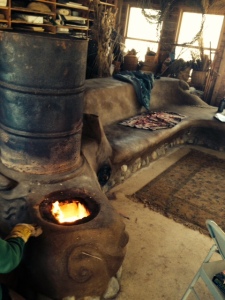
This builder's guide details rocket stoves and mass heaters integrated with thermal mass in strawbale and earthen structures for regenerative permaculture designs. RMH defined: J-shaped combustion for ultra-high temps/clean burn, heat piped via thermal mass (earthen bench as 'thermal battery') storing/releasing evenly. Combines masonry heater qualities: 90-95% efficiency, 10% fuel conventional stoves. Construction sequence: firebox (refractory), riser (ceramic fiber), drum exchanger, cob bench (3:1 sand/clay + straw), flue. Dimensions: 8" system for 150m², mass vol 55x flue length. Performance: 24hr+ hold at 70°F from 1-2hr burn. Ties to passive solar: south glazing preheat, greenhouse zoning. Actionable: material lists (£500-800 build), curing protocol, efficiency tweaks (insulated throats). Field-tested in Midwest permaculture: fuel cut 80%, integrated food forests. Challenges: mass-earth contact for conduction, moisture control in humid climates. Hybrid with earthships: tire mass + RMH benches. Metrics: diurnal stability for crops, self-sufficiency 80%. Steps for practitioners: draft tests, cob ratios, plaster finishes.
Source: strawbalestudio.org
Related Analysis
- Off-Grid Homesteads Merge Thermal and Electrical Renewable Systems — Several 2024–2025 case studies show off-grid permaculture sites pairing rocket mass heaters with solar or micro-hydro el…
- Off-Grid Solar Projects Shed Legacy Batteries for LFP — Several sources suggest LFP batteries are becoming the go-to storage solution as solar adoption grows across off-grid an…
Related on PermaNews
- Dirt Village for 6: 5-Year Off-Grid Family Build (Video)
- Mexico's Bioconstruction: Playa Viva's Natural Building Tech (Case Study)
- Rocket Mass Heater: Efficient, Low-Emission Heating Explained (Video)
- Raketenofen: 24h Wärme mit 1h Feuer – Low-Tech Effizienz (Video)
- Nachhaltig bauen: FNRs virtuelle Baustelle für Holz, Stroh, Hanf (How-To Guide)
- Rammed Earth: 2050 Sustainable Building Material Series Deep Dive (How-To Guide)
Explore more in Shelter, Energy & Infrastructure — the full hub for this knowledge area.