Sustainable Straw-Bale Homes
PermaNews Brief
Key Takeaways
Straw-bale homes are a historic, energy-efficient, and environmentally friendly building option.
- Proven construction technique since 1896
- High efficiency in heating and cooling
- Utilizes recycled materials creatively
- Successful in cold climates
- Integrates well with passive solar strategies
Why It Matters
Straw-bale homes offer sustainable, affordable housing solutions while enhancing energy efficiency and comfort in diverse climates.
What to Do Next
Research local regulations and resources for straw-bale construction.
Permaculture Context
For permaculture designers and homesteaders serious about closing the loop on their built environment, straw-bale construction deserves a place near the top of the materials conversation — not as a novelty, but as a mature, field-tested system with over a century of documented performance. What the mainstream green-building world often misses is how naturally straw bale fits within permaculture's core ethic of using biological resources wisely: straw is an agricultural byproduct that would otherwise be burned or left to decompose, and redirecting it into a load-bearing thermal envelope is exactly the kind of productive cycling permaculture seeks. The real design opportunity here lies in integration — pairing straw-bale walls with rammed-earth thermal mass, passive solar orientation, and greywater-fed landscaping creates a whole-systems home that earns its energy rather than consuming it. For anyone planning an owner-built project, the practitioner-scale evidence from cold climates like British Columbia and Alberta removes a significant psychological barrier: this is not experimental fringe building, it is proven appropriate technology waiting to be applied with intention.
Recommended for: Builders, designers, and sustainability advocates seeking practical solutions.
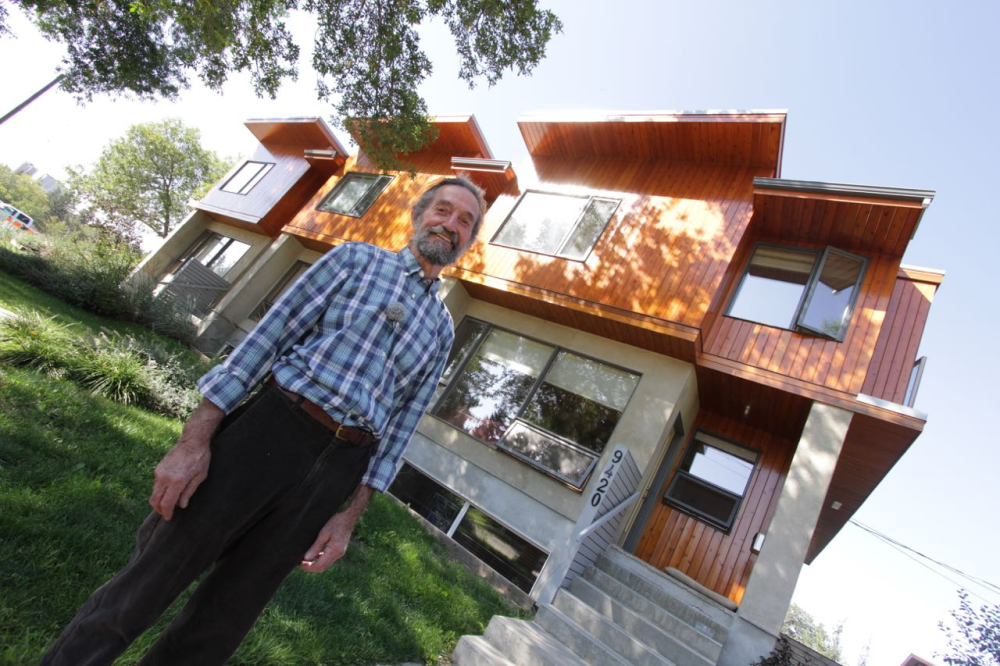
This article offers a substantive overview of straw-bale housing with enough project detail to be useful for builders, designers, and policy-minded readers. It explains that straw-bale construction is an old and proven technique and notes that the first documented structure dates to 1896, with dozens of straw-bale structures built in the following decades. The article then moves beyond general history by discussing real homes and the performance of straw bale in cold-climate use. It quotes Habib Gonzalez of Sustainable Works, who has built more than 100 straw-bale homes in British Columbia and Alberta, providing a sense of field experience and scale. The piece also describes the environmental and comfort advantages of the homes: owner-built aesthetics, recycled-material use, and high heating and cooling efficiency. It includes moisture-performance observations, noting that the National Research Council of Canada confirmed fire resistance and that wall moisture levels in a set of homes were measured and found to stabilize over time. One home discussed in the article uses a solar thermal system with rammed-earth walls as thermal batteries and a solar porch reminiscent of Earthship design, which makes the piece relevant to broader regenerative and hybrid passive-solar strategies. The article is valuable because it combines historical context, performance claims, practitioner experience, and real-world building systems rather than treating straw bale as a purely experimental technique. For anyone researching natural building in regenerative living contexts, it provides evidence that straw bale can be integrated into energy-efficient housing with attention to moisture, durability, and passive solar design.
Source: pembina.org
Related Analysis
- Off-Grid Homesteads Merge Thermal and Electrical Renewable Systems — Several 2024–2025 case studies show off-grid permaculture sites pairing rocket mass heaters with solar or micro-hydro el…
- Off-Grid Solar Projects Shed Legacy Batteries for LFP — Several sources suggest LFP batteries are becoming the go-to storage solution as solar adoption grows across off-grid an…
Related on PermaNews
- Explore the Permaculture Design Certificate Course for Sustainable Living (How-To Guide)
- 2025: Rocket Mass Heaters in PHI-Certified Earthship Tiny Homes (Case Study)
- Earthship Retrofits: PHI Standards & Regenerative Guide 2025 (Case Study)
- Häuser bauen mit Stroh und Lehm – Workshop zu Strohballenbau und Lehmputz auf Stroh (Event)
- 2024 Earth-Sheltered Timber Frame: PermaFarm Build Guide (How-To Guide)
- Cob-Straw Infills: Timber Frame Resilience for Your Build (How-To Guide)
Explore more in Shelter, Energy & Infrastructure — the full hub for this knowledge area.