Kaisner's Mediterranean Food Forest: Sculpting Nature
By The Natural Farmer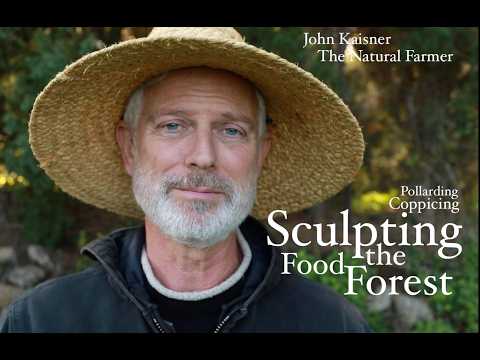
PermaNews Brief
Key Takeaways
John Kaisner’s Mediterranean food forests illustrate permaculture success through ecological understanding and iterative design.
- Observation is key for site-specific permaculture design.
- Water management crucial in Mediterranean climates.
- Swales, contour planting, and mulching conserve water.
- Diverse, climate-adapted plants form resilient ecosystems.
- Collaborate with nature, don't impose rigid plans.
Why It Matters
Kaisner’s approach offers a practical model for creating sustainable, productive ecosystems in challenging climates, emphasizing natural processes over human imposition.
What to Do Next
Watch the video to see how John Kaisner implements these permaculture principles in practice.
Recommended for: Anyone interested in applying permaculture principles in Mediterranean or similar dry climates, focusing on site-specific design and water management.
John Kaisner's work in establishing food forests, particularly in Mediterranean climates, offers a compelling case study in applied permaculture principles. His approach emphasizes a deep understanding of ecological systems and a patient, iterative process of design and implementation. Kaisner's methodology is not about imposing a rigid plan onto the landscape, but rather about collaborating with natural processes to create resilient, productive ecosystems.
A core tenet of Kaisner's philosophy is the careful observation of the site. Before any planting begins, he dedicates significant time to understanding the microclimates, soil composition, water flow, and existing vegetation. This observational phase is crucial for identifying opportunities and constraints, ensuring that the design is tailored to the specific conditions of the land. For instance, understanding sun exposure patterns helps in strategically placing sun-loving plants versus those that prefer shade, while analyzing water movement informs the creation of swales or other water-harvesting features.
In Mediterranean climates, water management is a paramount concern. Kaisner often incorporates techniques like swales, contour planting, and mulching to maximize water retention and minimize runoff. Swales, which are ditches dug along contours, help to slow down and spread water across the landscape, allowing it to infiltrate the soil more effectively. This not only conserves water but also recharges groundwater and supports the growth of plants. Mulching, using organic materials like wood chips or straw, further aids in moisture retention by reducing evaporation and suppressing weeds, thereby creating a more stable and fertile soil environment.
The selection of plant species is another critical aspect of Kaisner's food forest design. He prioritizes a diverse array of edible and useful plants, focusing on those that are well-adapted to the Mediterranean climate and can form beneficial relationships with each other. This includes a mix of canopy trees, understory trees, shrubs, herbaceous plants, groundcovers, and climbers, all working together to create multiple layers of production and ecological function. Nitrogen-fixing plants are often integrated to improve soil fertility naturally, reducing the need for external inputs. The emphasis is on creating a polyculture rather than a monoculture, which enhances biodiversity and makes the system more resistant to pests and diseases.
Kaisner's approach also highlights the importance of succession. Food forests are not static gardens; they evolve over time. He designs for this evolution, often starting with pioneer species that can tolerate harsh conditions and improve the soil, gradually introducing more sensitive or long-lived species as the environment becomes more hospitable. This long-term perspective is fundamental to permaculture, recognizing that the full benefits of a food forest may take years, or even decades, to fully materialize.
Furthermore, the concept of "guilds" is central to Kaisner's planting strategies. A guild is a synergistic grouping of plants that support each other's growth and health. For example, a fruit tree might be planted with nitrogen-fixing plants, pest-repelling herbs, and groundcovers that suppress weeds and retain moisture. This integrated approach mimics natural ecosystems, where diverse species interact in complex ways to create a thriving community.
Beyond the technical aspects, Kaisner's work underscores a philosophical shift towards working *with* nature rather than against it. It involves a degree of patience and a willingness to learn from the land. The food forest, in this context, becomes more than just a source of food; it is a living, breathing ecosystem that provides a multitude of ecological services, from soil regeneration and water purification to habitat creation for wildlife. His efforts demonstrate that by applying permaculture principles, it is possible to transform degraded landscapes into productive and resilient systems, offering a sustainable model for food production and ecological restoration in challenging environments.
Source: youtube.com
Related Analysis
- Rainforest Alliance Launches Certification Tied to Soil Results — A developing direction in regenerative ag certifications demands measurable soil outcomes, not just practice adoption. R…
- Campbell's Corporate Grants Push Farmers Into Regenerative Trials — Campbell's Grower Grants are funding real-acre regenerative trials, offering a corporate-backed mechanism for on-farm ex…
Related on PermaNews
- Ernst Götsch's Cacao Syntropy: Master Agroforestry Now (How-To Guide)
- Finnish Off-Grid: Rocket Mass Heater Performance in Greenhouse (Case Study)
- Berlins schwimmende Gärten: Permakultur auf dem Wasser (Case Study)
- Rodale Report 2025: Thermal Mass Boost in Solar Greenhouses (Case Study)
- AUTarcaMatricultura La Palma: Permakultur & Energieautarkie (How-To Guide)
- Earthaven Ecovillage: 30 Years Off-Grid with Hydro & Solar (Video)
Explore more in Food Systems & Growing — the full hub for this knowledge area.