Essential Water Strategies for Resilient Off-Grid Living
PermaNews Brief
Key Takeaways
Reliable water access is critical for off-grid living, requiring more than just solar pumps.
- Water security is essential for off-grid homes.
- Electric pumps may fail during outages.
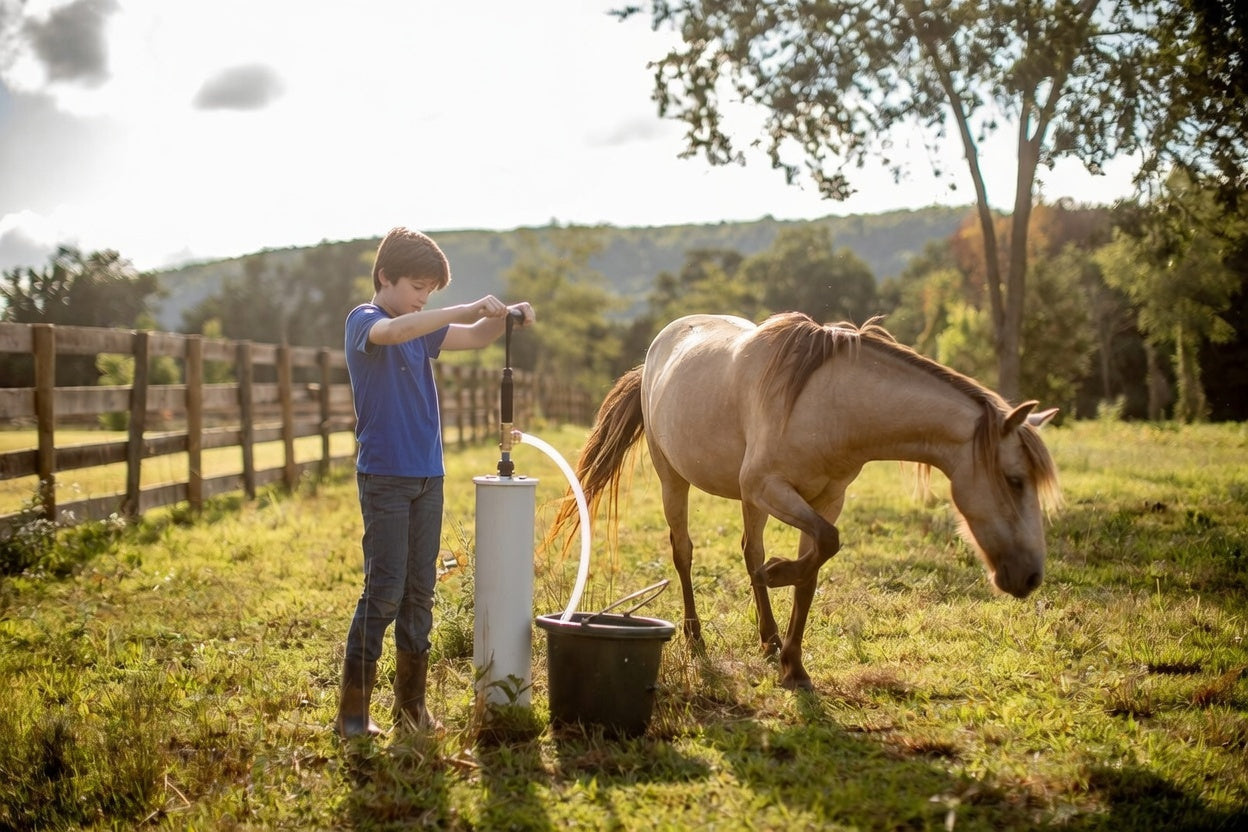
- Manual pumps provide resilience in emergencies.
- Planning should include redundancy strategies.
- Consider the context of your water needs.
Why It Matters
Ensuring consistent water access safeguards against system failures and environmental challenges, supporting self-sufficiency.
What to Do Next
Evaluate your current water access systems for redundancy.
Permaculture Context
For permaculture designers, water is not simply a utility — it is the first element of a functional, living system, and its absence cascades into every other layer of a homestead's resilience. The conversation around hand pumps matters here because it reveals a deeper design flaw that many off-grid setups share: substituting one form of energy dependency for another without building genuine redundancy into the system. A solar-powered submersible pump is genuinely valuable, but it belongs to the same fragile category as grid electricity when weather, equipment failure, or depletion enters the picture. What permaculture principles ask of us is zone-based thinking — placing water access as close to human need as possible with the fewest points of failure between source and use. A hand pump is not a nostalgic fallback; it is a deliberate design choice that honors the principle of stacking functions and reducing system vulnerability. Practitioners designing food forests, animal systems, or medicinal gardens should treat manual water access as foundational infrastructure, not an afterthought — because no harvest, no composting system, and no livestock care survives a week without it.
Recommended for: Off-grid homeowners seeking resilient water solutions.
This article explains why water security is one of the most important design priorities for off-grid living and why relying only on electric pumping can leave a homestead vulnerable. It starts from a practical reality: most off-grid homes use a private well, but that well is often still dependent on an electric submersible pump powered by solar panels, a generator, or battery storage. The piece emphasizes that this arrangement may work under normal conditions, yet it fails when those systems are down, fuel is unavailable, batteries are depleted, or weather limits solar production. The article’s main solution is a manual backup through a hand well pump, specifically framed as a resilience measure rather than a luxury. It highlights that a hand pump requires no external power and therefore maintains access to water during weather disruptions, fuel shortages, or system failures. The practical value of the article lies in its preparedness mindset: it is not only about reducing utility dependence, but about designing for continuity of service under stress. For off-grid homeowners, the key insight is that water planning should include redundancy, not just an alternative energy source for the same pump. The article implies that manual pumping can preserve core household functions when automation is unavailable, especially in situations where maintaining access to water quickly matters more than convenience. It is especially relevant for readers evaluating whether their off-grid setup is truly self-reliant or merely grid-independent under ideal conditions. The content also helps readers think about equipment selection in a preparedness context, suggesting that a hand pump is part of a layered water strategy that can complement solar, generator, and battery systems. The practical takeaway is that off-grid water planning should account for failure modes and ensure a basic, always-available method of extraction from the well. That makes the article useful to homesteaders, preppers, and rural property owners who need a concrete backup plan for essential water access.
Source: flojak.com
Related Analysis
- Second-Life EV Batteries Replace Costlier Storage in Off-Grid Sites — Several sources suggest repurposed EV batteries can cut stationary storage costs and carbon footprints, with early signa…
- Passive Water Harvesting Moves From Niche to Replicable Model — Early case studies from Tucson and Germany's Beckower Ökodorf suggest passive water harvesting can scale within permacul…
Related on PermaNews
- Finnish Off-Grid: Rocket Mass Heater Performance in Greenhouse (Case Study)
- Rodale Report 2025: Thermal Mass Boost in Solar Greenhouses (Case Study)
- Earthaven Ecovillage: 30 Years Off-Grid with Hydro & Solar (Video)
- 2025: Rocket Mass Heaters in PHI-Certified Earthship Tiny Homes (Case Study)
- Off-Grid Water: Cistern Design & Sizing for Security (How-To Guide)
- Net-Zero Greenhouse Design: Year-Round Food Production via ATTRA (How-To Guide)
Explore more in Water, Climate & Adaptation — the full hub for this knowledge area.