The New Peasants" (2025) Trailer: Future of Farming Unveiled
By Happen Films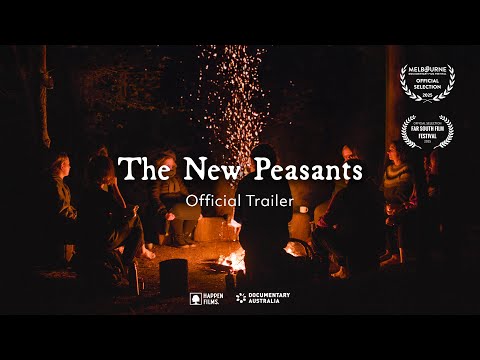
TL;DR: A new documentary, "The New Peasants," explores how modern farmers are embracing sustainable, community-focused agriculture, moving away from industrial practices.
- New documentary on sustainable farming.
- Examines diverse agriculturalists.
- Highlights permaculture and agroecology.
- Focuses on resilient food systems.
- Challenges industrial agriculture.
Why it matters: This film highlights a growing movement towards food security and environmental stewardship, offering insights into how agriculture can adapt to modern challenges.
Do this next: Seek out the documentary "The New Peasants" when it is released to learn more about these innovative agricultural approaches.
Recommended for: Anyone curious about the evolution of farming, sustainable living, and community-driven food systems.
A forthcoming documentary, "The New Peasants," explores the evolving landscape of food production and the individuals who are redefining what it means to be a farmer in the 21st century. The film delves into the motivations, challenges, and successes of a new generation of agriculturalists who are moving away from conventional, industrial farming practices towards more sustainable, regenerative, and community-focused approaches.
The documentary highlights a diverse group of people, not necessarily from traditional farming backgrounds, who are choosing to cultivate the land. These "new peasants" are often driven by a desire for greater food security, environmental stewardship, and a connection to the natural world that they feel is missing in modern society. They are depicted as individuals who are actively seeking to create resilient food systems that can withstand the pressures of climate change, economic instability, and global supply chain disruptions.
A central theme of the film appears to be the rejection of the industrial agricultural model, which is often characterized by monoculture, heavy reliance on synthetic inputs, and large-scale operations. Instead, the new peasants are shown embracing methods such as permaculture, agroecology, organic farming, and biodynamic practices. These approaches prioritize soil health, biodiversity, water conservation, and closed-loop systems, aiming to work in harmony with natural ecosystems rather than against them. The documentary suggests that these methods not only produce healthier food but also contribute to the regeneration of degraded landscapes and the mitigation of environmental damage.
The film also touches upon the economic realities and social aspects of this movement. It acknowledges that starting and maintaining a small-scale, sustainable farm can be financially challenging, requiring significant dedication and ingenuity. However, it also showcases innovative business models, direct-to-consumer sales, and community-supported agriculture (CSA) initiatives that help these farmers thrive. The documentary emphasizes the importance of community building and knowledge sharing among these new agriculturalists, highlighting how they are creating networks of support and collaboration.
Furthermore, "The New Peasants" seems to address the broader societal implications of this shift in farming. It suggests that the movement is not just about growing food differently, but also about fostering a deeper understanding of where food comes from, promoting local economies, and empowering individuals to take control of their food choices. The film appears to advocate for a more localized and decentralized food system, where consumers have a direct relationship with the producers and a greater awareness of the environmental and social impact of their food.
In essence, the documentary aims to provide an insightful look into a growing movement that is challenging conventional notions of agriculture. It portrays the new peasants as pioneers who are not only cultivating the land but also cultivating a new vision for a more sustainable, equitable, and resilient future. The film intends to inspire viewers to reconsider their relationship with food and the environment, and to recognize the vital role that these dedicated individuals play in shaping a healthier planet and society.