Sahel Agroforestry: Tree Density, Water, & Carbon Sequestration
PermaNews Brief
Key Takeaways
Managing tree density in Sahelian agroforestry systems is key to balancing carbon sequestration and crop yields in water-stressed regions.
- Optimal tree density balances carbon and crop yield.
- Faidherbia albida parklands access deep groundwater.
- Agroforestry boosts food security in semi-arid lands.
- Careful management is crucial for sustainability.
- Integrated systems offer climate adaptation benefits.
Why It Matters
Understanding the delicate balance between tree density and water availability can inform more effective agroforestry practices, leading to better environmental outcomes and improved food security.
What to Do Next
Assess tree density in your existing or planned agroforestry systems to optimize both ecological benefits and agricultural output.
Recommended for: Farmers, land managers, and policymakers in semi-arid regions looking to implement sustainable and productive agroforestry practices.
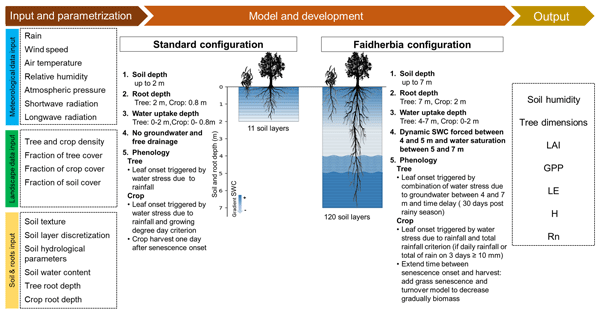
This scientific study investigates the ecological dynamics of Sahelian agroforestry systems, focusing on Faidherbia albida parklands that utilize deep groundwater resources. It analyzes how variations in tree density and water availability influence carbon sequestration and crop yields, revealing trade-offs between maximizing carbon uptake and maintaining agricultural productivity. The research underscores the ecological importance of these systems in semi-arid climates, highlighting their role in global carbon cycles and local food security. Findings suggest that careful management of tree density is crucial to optimize both environmental benefits and crop production in water-limited environments. The study contributes valuable insights for sustainable land management and climate adaptation strategies in the Sahel region.
Source: gmd.copernicus.org
Related Analysis
- Food Forest Courses Shift From Theory to Build-Ready Skills — Several food forest courses now open with site assessment and guild-building rather than design theory, suggesting a dev…
- Practitioners Build Silvopasture Playbook Before Researchers Catch Up — A small but consistent set of signals from the Northeast U.S. shows farmers actively piloting silvopasture while formal …
Related on PermaNews
- Ernst Götsch's Cacao Syntropy: Master Agroforestry Now (How-To Guide)
- Designing Regenerative Resilience: Participatory Living Labs (How-To Guide)
- Berlins schwimmende Gärten: Permakultur auf dem Wasser (Case Study)
- Finca Bellavista: Costa Rica's 200-Acre Water System Innovation (Case Study)
- Priya's 2024 India Report: 10-Hectare Water Harvesting Success (Case Study)
- Borneo's Rainforest Revival: Dr. Smits' Sugar Palm Village Hub (Case Study)
Explore more in Food Systems & Growing — the full hub for this knowledge area.