Solar Off-Grid: Virginia Farm Thrives Battery-Free
PermaNews Brief
Key Takeaways
Off-grid living dramatically cuts costs and boosts efficiency by largely eliminating batteries and synchronizing energy use with direct solar power.
- Minimize batteries by matching energy consumption to real-time solar generation.
- Utilize thermal mass and insulation for off-grid cooking and refrigeration.
- Prioritize low-power DC appliances to reduce conversion losses.
- Distribute small solar setups for localized power needs.
- Foster community cooperation to optimize shared energy resources.
Why It Matters
Reducing or eliminating batteries in off-grid solar systems significantly lowers costs, increases system longevity, and decreases environmental impact, making sustainable living more accessible.
What to Do Next
Research highly insulated appliances and consider passive thermal strategies for your specific energy needs.
Recommended for: Homesteaders, off-grid enthusiasts, and communities looking to implement cost-effective, sustainable, and resilient energy systems.
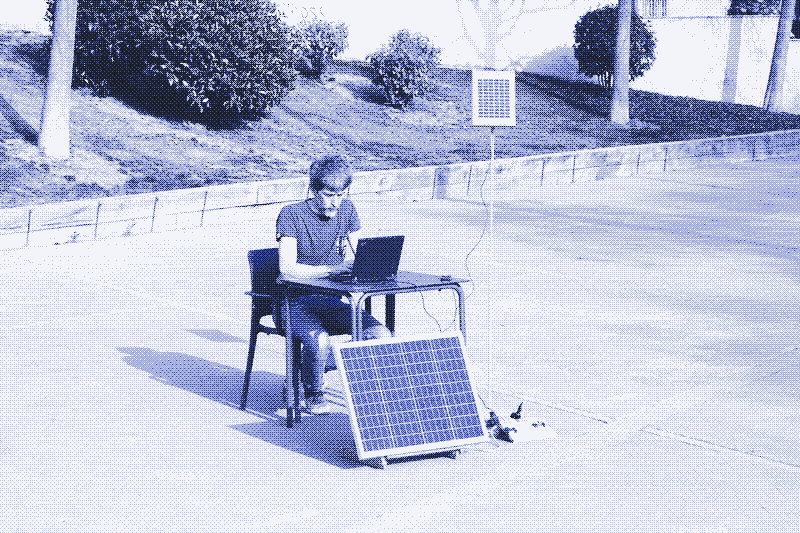
This article examines direct solar power systems that minimize or eliminate batteries for off-grid applications, spotlighting the Living Energy Farm in Virginia, USA, an environmental education community powering multiple homes, a communal kitchen, metal workshop, and farm with primarily direct solar (only 10% routed through nickel-iron batteries). The approach leverages real-time solar generation matched to loads, drastically cutting costs, boosting efficiency, and enhancing sustainability by avoiding battery degradation and resource intensity. Key method: appliances operate only during sunlight hours or use passive thermal strategies for evening needs. For instance, fridges employ thick insulation to maintain cooling with minimal 100-200W panels, retaining cold post-sunset without power. Cookers use insulated thermal mass (e.g., haybox or fireless cooker) to store solar-heated thermal energy for later cooking, decoupling electricity from post-sunset use. The farm demonstrates communal organization: shared tasks like collective cooking reduce individual peak loads, with decentralized panels (e.g., balcony-mounted 4x50W for fridge/hob) eliminating grid infrastructure needs. Practical details include matching panel output to specific loads—100W suffices for an insulated fridge running daytime only—and scaling via multiple small panels rather than large arrays. This contrasts battery-heavy systems by prioritizing direct DC use where possible, reducing conversion losses. Insights for regenerative homesteads: integrate low-power DC appliances, thermal storage for food preservation/cooking, and community labor-sharing to achieve off-grid viability without massive storage. The farm's model proves battery-free or minimal-battery solar can sustain full homestead operations, offering actionable steps like retrofitting appliances with insulation and timing usage to insolation patterns.[4]
Source: solar.lowtechmagazine.com
Related Analysis
- What Climate-Adapted Natural Building Actually Costs in Germany — Climate-adapted natural building in Germany — spanning straw bale, rammed earth, hempcrete, and Passive House-certified …
- Natural Builders Swap Whole-Structure Cob for Hybrid Wall Systems — Several sources suggest natural builders are dividing straw bale and cob by solar orientation within single homes—a func…
Related on PermaNews
- Finnish Off-Grid: Rocket Mass Heater Performance in Greenhouse (Case Study)
- Rodale Report 2025: Thermal Mass Boost in Solar Greenhouses (Case Study)
- Earthaven Ecovillage: 30 Years Off-Grid with Hydro & Solar (Video)
- 2025: Rocket Mass Heaters in PHI-Certified Earthship Tiny Homes (Case Study)
- Off-Grid Water: Cistern Design & Sizing for Security (How-To Guide)
- Net-Zero Greenhouse Design: Year-Round Food Production via ATTRA (How-To Guide)
Explore more in Shelter, Energy & Infrastructure — the full hub for this knowledge area.