Seedless Gardening: Unlocking Nature's Totipotency
By Urban Farmer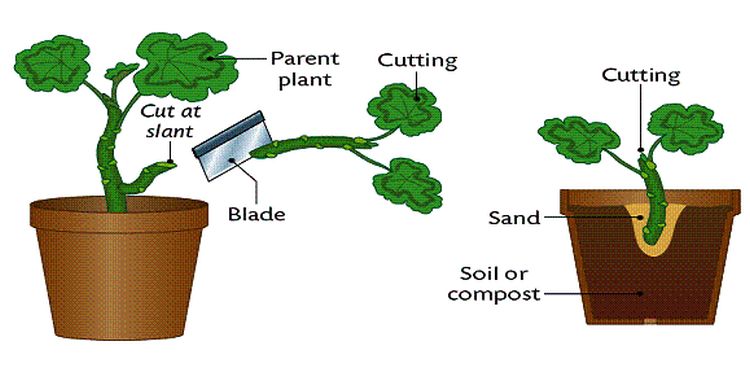
TL;DR: Grow plants from cuttings, layering, or divisions to multiply your garden and preserve desired traits without relying on seeds.
- Propagate plants without seeds using vegetative methods.
- Cuttings allow new plants from stems, leaves, or roots.
- Layering encourages roots on stems still attached to the parent.
- Vegetative propagation creates genetic clones of parent plants.
- Preserve desirable traits and accelerate plant maturity.
- Asexual reproduction bypasses the need for pollination.
Why it matters: Understanding vegetative propagation expands gardening possibilities, allowing for easier multiplication of favorite plants and resilience against seed-related challenges.
Do this next: Take a stem cutting from a healthy houseplant and try rooting it in water or soil to observe the process firsthand.
Recommended for: Anyone looking to expand their garden, preserve favorite plant varieties, or explore alternative plant propagation methods.
The concept of growing plants without relying on seeds, a process known as vegetative propagation, leverages a fundamental biological principle called totipotency. Totipotency refers to the remarkable capacity of a single living cell to differentiate and develop into a complete, new organism. While animals generally lack this widespread ability, it is a common and powerful characteristic of plant cells, allowing for various methods of asexual reproduction.
Traditionally, the understanding of plant reproduction often centers on seeds, which are the result of sexual reproduction involving pollination. However, vegetative propagation bypasses this sexual stage entirely, producing genetically identical clones of the parent plant. This method offers several advantages, including the ability to preserve desirable traits, accelerate plant maturity, and cultivate plants that may not readily produce viable seeds.
One of the most straightforward forms of vegetative propagation is through cuttings. This involves taking a section of a stem, leaf, or root from a parent plant and encouraging it to form new roots and shoots. Stem cuttings are particularly common, where a piece of stem with at least one node (the point where leaves or branches emerge) is placed in a suitable growing medium, often with the aid of rooting hormones to stimulate root development. Leaf cuttings, while less common, are effective for certain plants like African violets or succulents, where a single leaf can generate an entirely new plant. Root cuttings are also utilized for some species, where sections of roots are planted to produce new shoots.
Another widely practiced technique is layering. This method involves encouraging roots to form on a stem while it is still attached to the parent plant. In simple layering, a low-growing branch is bent down to touch the soil, and a section of the stem is buried. Once roots have formed, the new plant can be severed from the parent. Air layering is a variation where a section of a stem higher up on the plant is wounded, wrapped in moist material (like sphagnum moss), and then covered to maintain humidity. Once roots develop within the moss, the rooted section is cut and planted.
Division is a simple and effective method for plants that grow in clumps, such as many perennials and some herbs. This involves carefully separating the root ball or crown of a mature plant into smaller sections, each with its own roots and shoots, which can then be replanted as individual specimens. This not only propagates the plant but can also rejuvenate older, overgrown plants.
Grafting is a more advanced technique primarily used for woody plants, especially fruit trees and roses. It involves joining two plant parts – the scion (a shoot or bud from the desired plant) and the rootstock (the root system of another plant) – so they grow together as a single plant. Grafting is employed to combine the desirable fruiting or flowering characteristics of the scion with the disease resistance, vigor, or specific soil adaptations of the rootstock. Budding is a specific type of grafting where a single bud from the scion is inserted into the rootstock.
Beyond these common methods, other forms of vegetative propagation include tissue culture, a sophisticated laboratory technique where plant cells or tissues are grown in a sterile nutrient medium to produce numerous identical plantlets. This method is particularly useful for mass propagation of disease-free plants or rare species. Bulbs, corms, rhizomes, and tubers are also natural forms of vegetative propagation, as these specialized underground storage organs can produce new plants from their stored energy reserves.
In essence, vegetative propagation offers a diverse toolkit for gardeners and growers to expand their plant collections, maintain specific plant characteristics, and cultivate a garden without the traditional reliance on seeds, all thanks to the inherent totipotency of plant cells.