Adam's Journey: From Homeless to Frugal Dryland Homestead
By Kirsten Dirksen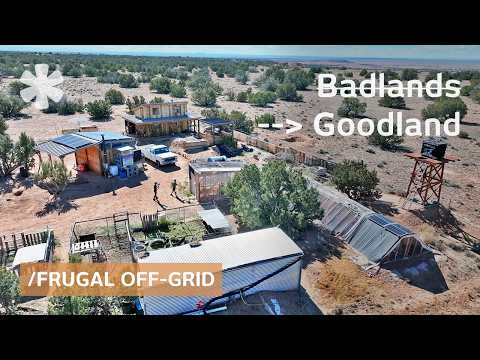
TL;DR: A former homeless man transforms barren land into a self-sufficient homestead using permaculture principles, emphasizing water conservation and soil regeneration.
- Homesteading reclaims arid land.
- Permaculture aids water retention.
- Soil regeneration is key.
- Swales and terracing prevent erosion.
- Compost and mulch enrich soil.
Why it matters: This story demonstrates how permaculture practices can create productive ecosystems even in harsh environments, offering a path to self-sufficiency and land restoration.
Do this next: Learn about swales and terracing for water management on your land.
Recommended for: Those interested in permaculture, dryland regeneration, and inspiring stories of self-sufficiency.
A man named Adam, who previously experienced homelessness, has embarked on a journey to transform a barren, arid piece of land into a self-sufficient homestead. His story highlights a remarkable transition from living on the streets to embracing a permaculture-inspired lifestyle, demonstrating resilience and ingenuity in the face of challenging circumstances.
Adam's property is situated in a dryland environment, characterized by minimal rainfall and harsh conditions. This presents significant hurdles for cultivation and establishing a thriving ecosystem. However, he has adopted a strategic approach, focusing on water conservation and soil regeneration techniques that are central to permaculture principles. His primary goal is to create a productive landscape that can sustain him with food, water, and shelter, all while minimizing external inputs and maximizing natural processes.
One of the foundational elements of his project involves extensive earthworks designed to capture and retain rainwater. This includes the creation of swales, which are long, level ditches dug along contours to slow down water flow, allowing it to infiltrate the soil rather than running off. These swales are crucial for rehydrating the land, encouraging the growth of vegetation, and recharging the groundwater. He also employs techniques like terracing on slopes to prevent erosion and create more stable planting areas.
Beyond water management, Adam is dedicated to improving the quality of the impoverished soil. He understands that healthy soil is the bedrock of a productive ecosystem. His methods include incorporating organic matter, such as compost and mulch, to enrich the soil structure, increase its water-holding capacity, and provide essential nutrients for plants. He also practices cover cropping, where specific plants are grown to protect and improve the soil, rather than for harvest. These practices are vital for transforming the infertile ground into a fertile medium capable of supporting diverse plant life.
His choice of plants is carefully considered, prioritizing drought-tolerant and native species that are well-adapted to the local climate. He is establishing a food forest, a multi-layered system of edible plants that mimics a natural forest ecosystem. This includes fruit trees, nut trees, shrubs, and groundcovers, all working together to create a resilient and productive system. The diversity of plants helps to build soil health, attract beneficial insects, and provide a varied diet.
For shelter, Adam has constructed a modest dwelling using readily available and sustainable materials. His approach emphasizes simplicity and functionality, reflecting a desire to live lightly on the land. The design likely incorporates passive solar principles to regulate indoor temperatures, reducing the need for artificial heating and cooling. This focus on sustainable building practices further underscores his commitment to an environmentally conscious lifestyle.
Adam's journey is not just about physical transformation of the land; it also represents a personal transformation. His experiences with homelessness have likely instilled a deep appreciation for basic necessities and a drive for self-reliance. The homestead project is a testament to his determination to create a stable and fulfilling life through hard work and an understanding of ecological principles.
The project serves as an inspiring example of how permaculture can be applied in challenging environments and how individuals can reclaim their lives by connecting with the land. It highlights the potential for regenerative practices to not only produce food and shelter but also to heal degraded landscapes and foster personal well-being. Adam's story demonstrates that with knowledge, perseverance, and a commitment to sustainable living, even the most barren land can be transformed into a thriving and productive homestead.