David Holmgren on RetroSuburbia: Adapting Suburbs for Future
By Permaculture Principles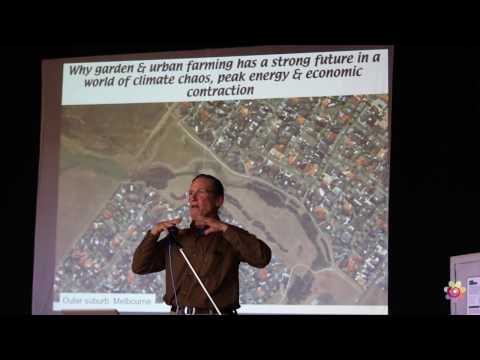
TL;DR: Suburbs can transform into resilient hubs by localizing food, water, and waste systems for a sustainable future.
- Suburbs designed for cheap energy are unsustainable.
- RetroSuburbia offers a framework for adaptation.
- Localize production and community resilience.
- Integrate traditional practices into modern living.
- Adaptation creates local economic opportunities.
Why it matters: Current suburban models are vulnerable to energy descent and climate change, making adaptation crucial for future sustainability and resilience.
Do this next: Explore ways to implement water harvesting and greywater recycling in your home.
Recommended for: Homeowners, community organizers, and urban planners interested in sustainable suburban transformation.
A recent presentation by permaculture co-originator David Holmgren explored the concept of "RetroSuburbia," a framework for adapting existing suburban environments to be more resilient and sustainable in the face of future challenges. The talk delved into the historical context of suburban development, the inherent vulnerabilities of current suburban models, and practical strategies for transforming these spaces into thriving, productive landscapes.
Holmgren began by outlining the historical trajectory of suburban growth, particularly in Australia, highlighting how these areas were designed for an era of cheap energy and abundant resources. He emphasized that the current suburban paradigm, characterized by large houses, extensive lawns, and reliance on external infrastructure for food, water, and waste management, is inherently unsustainable in a future defined by energy descent and climate change. The presentation underscored the need to move beyond the conventional understanding of suburbs as merely residential zones and instead view them as potential hubs of localized production and community resilience.
A core tenet of RetroSuburbia, as explained by Holmgren, is the idea of "re-localization." This involves reducing dependence on global supply chains and fostering self-sufficiency at the household and neighborhood levels. He detailed various ways this can be achieved, including transforming lawns into productive gardens for food cultivation, integrating small-scale livestock, and implementing water harvesting and greywater recycling systems. The talk stressed that these changes are not about abandoning modern conveniences entirely, but rather about strategically re-integrating traditional practices and resourcefulness into a contemporary context.
Holmgren also addressed the social and economic dimensions of RetroSuburbia. He discussed how adapting suburban homes and landscapes can create new opportunities for local economies, such as through the exchange of homegrown produce, the provision of local services, and the development of community-based enterprises. The presentation highlighted the potential for increased social cohesion as neighbors collaborate on shared projects, share resources, and build stronger community networks. He suggested that these transformations could lead to a more vibrant and interconnected local culture, moving away from the isolated nature of much modern suburban living.
Furthermore, the talk explored the practicalities of implementing RetroSuburbia, acknowledging the challenges and offering solutions. Holmgren provided examples of how existing regulations and planning policies might need to evolve to support these changes. He also touched upon the importance of incremental adaptation, suggesting that individuals and communities can start with small, manageable projects and gradually expand their efforts. The presentation emphasized that RetroSuburbia is not a one-size-fits-all solution but rather a flexible framework that can be adapted to diverse suburban contexts and individual circumstances.
In essence, Holmgren's "RetroSuburbia" talk presented a compelling vision for the future of suburban living. It offered a comprehensive framework for understanding the vulnerabilities of current suburban models and provided a wealth of practical strategies for transforming these areas into more resilient, productive, and community-oriented spaces. The presentation underscored the urgency of these adaptations in light of impending environmental and economic shifts, while also offering a hopeful and empowering message about the potential for positive change at the local level.
Source: youtube.com
Related Analysis
- Homeowners Retrofit Properties with Renewable Energy Solutions — Renewable energy retrofitting gains traction as regenerative agriculture principles inform home upgrades. Experts point …
- New Practices Build Climate-Resilient Cob Homes — Cob construction emerges as a key strategy in enhancing resilience against ecological challenges in permaculture systems…
Related on PermaNews
- Autarke Permakultur-Siedlung: Solar-Wind & Redox-Flow-Speicher (Case Study)
- Vermont Becomes First US State to Ban Paraquat Herbicide Over Parkinson’s Fears (Article)
- Adaptation and Resilience Solutions in Action (Case Study)
- Case Studies - New York State Climate Impacts Assessment (Case Study)
- Progress in Adapting to Climate Change: 2025 Report to Parliament (Article)
- Severe Global Food Crisis Could Come Within the Year, Says UN Agency (Article)
Explore more in Shelter, Energy & Infrastructure — the full hub for this knowledge area.