Local Woodchips: Weed Control & Soil Boost on a 50-Acre Farm
PermaNews Brief
Key Takeaways
Locally sourced woodchips effectively control weeds, regenerate soil, and boost yields on small farms, enhancing permaculture systems and drought resilience.
- Woodchips suppress weeds and reduce irrigation needs.
- Improved soil structure enhances gas exchange and pathogen suppression.
- Soil organic matter increased significantly to 11%.
- Higher yields and drought resilience were observed.
- Cost-effective for small-scale permaculture farms.
Why It Matters
Implementing woodchip mulching offers a practical, cost-effective method for farmers to enhance soil health, reduce reliance on external inputs, and improve crop resilience, particularly in drought-prone areas.
What to Do Next
Source fresh woodchips from local tree services and apply a 6-12 inch layer to your garden beds without tilling.
Recommended for: Small-scale farmers, homesteaders, and permaculture enthusiasts seeking sustainable weed control and soil improvement solutions.
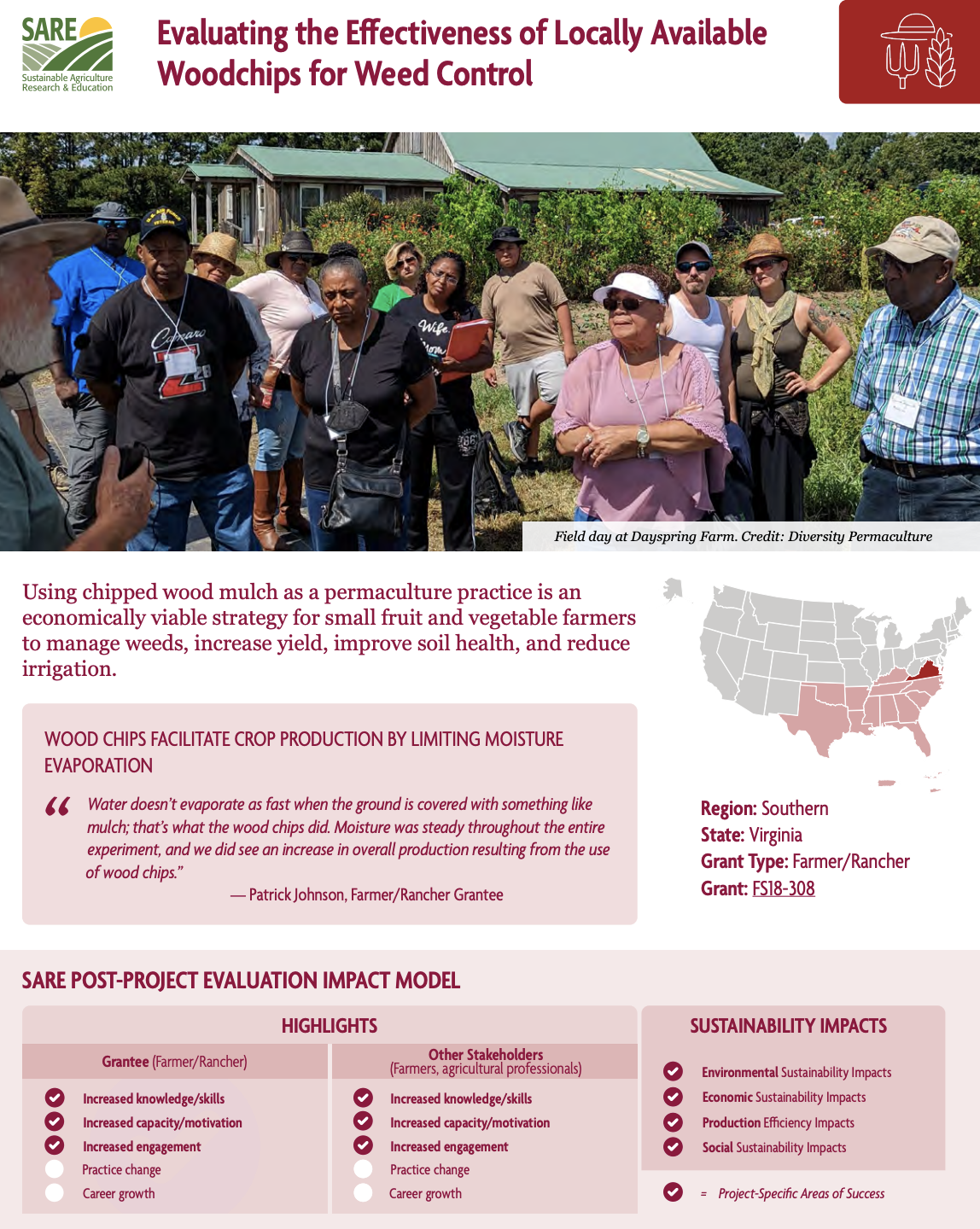
This case study details a SARE-funded project on a 50-acre U.S. farm implementing permaculture practices using locally available woodchips for weed control, soil regeneration, and enhanced self-sufficiency. Farmer Johnson tested chipped wood mulch from tree trimmings on small fruit and vegetable plots, comparing it against conventional methods. Key techniques included applying a thick layer of fresh woodchips (90% needles, leaves, and branches) directly over soil without tilling, which suppressed weeds non-chemically, reduced irrigation needs by retaining moisture, and improved soil structure through enhanced gas transfer and pathogen suppression. Results showed steady soil moisture throughout experiments, increased overall production yields, and a dramatic rise in soil organic matter from 4% to nearly 11% after integrating woodchips with cover cropping and organic matter additions. This resilience proved vital during droughts, as high organic matter eliminated reliance on external water sources like wells or ponds. Economically, woodchips were viable for small-scale operations, sourcing from local tree services at low or no cost, aligning with permaculture's emphasis on using on-site resources. Environmentally, it boosted fungal activity, eliminated pesticide needs, and enhanced climate resilience with minimal water use. Practical implementation steps: source fresh chips high in nitrogen from leaves and carbon from branches; apply 6-12 inches thick in no-dig beds; monitor for decomposition into compost-like material over seasons. Lessons include avoiding plastic mulches, which harm soil biology, and combining with cover crops for optimal fertility. This approach offers replicable strategies for regenerative living, turning waste into a tool for sustainable food production and ecosystem restoration on homestead-scale farms.
Source: sare.org
Related Analysis
- Food Forest Courses Shift From Theory to Build-Ready Skills — Several food forest courses now open with site assessment and guild-building rather than design theory, suggesting a dev…
- Practitioners Build Silvopasture Playbook Before Researchers Catch Up — A small but consistent set of signals from the Northeast U.S. shows farmers actively piloting silvopasture while formal …
Related on PermaNews
- Ernst Götsch's Cacao Syntropy: Master Agroforestry Now (How-To Guide)
- Finnish Off-Grid: Rocket Mass Heater Performance in Greenhouse (Case Study)
- Berlins schwimmende Gärten: Permakultur auf dem Wasser (Case Study)
- Rodale Report 2025: Thermal Mass Boost in Solar Greenhouses (Case Study)
- AUTarcaMatricultura La Palma: Permakultur & Energieautarkie (How-To Guide)
- Earthaven Ecovillage: 30 Years Off-Grid with Hydro & Solar (Video)
Explore more in Food Systems & Growing — the full hub for this knowledge area.