Why Tiny Houses Might Be the Future of Sustainable Living
By Undecided with Matt Ferrell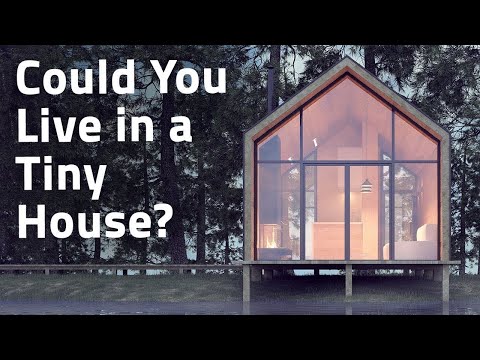
PermaNews Brief
Key Takeaways
Embracing tiny homes could redefine affordability and sustainability in housing.
- Tiny homes use fewer materials and energy
- Average tiny house consumes only 7% of average energy
- Compact living reduces household carbon footprint
- More affordable than traditional housing options
- Suitable model for low-impact living
Why It Matters
Tiny homes present a viable solution for sustainable living by minimizing resource demands while promoting affordability. This could ease housing shortages while addressing environmental concerns.
What to Do Next
Explore tiny home designs and their benefits through the video.
Permaculture Context
For permaculture practitioners, the tiny house movement isn't simply about downsizing square footage — it's about rightsizing the relationship between human habitation and living systems. When a dwelling consumes only a fraction of conventional energy, it fundamentally changes what's possible with on-site renewable generation: a modest solar array or small wind setup can realistically cover your entire load, removing dependence on the grid and freeing capital for productive landscape investment. That shift matters enormously. Money not spent on mortgage debt or utility bills becomes available for food forests, water harvesting infrastructure, soil building, and seed saving — the actual regenerative systems that produce long-term resilience. A compact footprint also means less hardscape, more permeable surface, and greater opportunity to integrate the home into its site ecology rather than dominating it. For anyone designing a homestead or intentional property, a well-placed tiny structure can anchor a productive zone system without monopolizing land or resources. The real opportunity here isn't aesthetic minimalism — it's redirecting freed resources toward the living systems that actually sustain you.
Recommended for: Individuals interested in sustainable living and affordable housing solutions.
This video argues that tiny houses may play an important role in sustainable living because they use fewer materials, require less energy, and create less waste than conventional homes. It explains that tiny homes are typically no larger than 400 square feet and can be as small as 80 square feet, which helps reduce the scale of construction and operational resource use. The content also emphasizes practical benefits such as lower maintenance and lower energy consumption, making tiny homes more accessible and less resource-intensive than traditional housing.
A particularly concrete point in the video is the claim that the average tiny house uses only 7% of the electricity needed to power an average-sized house. That figure supports the broader argument that compact living can significantly reduce household energy demand. The video also notes that tiny homes are often more affordable than Earthships, modular homes, or passive houses, and that this affordability can help people achieve home ownership without spending hundreds of thousands of dollars. This makes the content relevant to both sustainability and housing access.
The video is useful for anyone studying low-impact housing because it connects environmental design with real-world housing choices. It frames tiny homes as a lifestyle and infrastructure model that can reduce carbon footprint through smaller material inputs, lower water and energy consumption, and reduced waste. It also identifies geographic areas where tiny-home living is common, suggesting that the model is already established in several parts of the United States. For practical decision-making, the strongest takeaway is that tiny homes combine affordability and ecological efficiency in a form that may be easier for some households to adopt than larger alternative housing systems.
Source: youtube.com
Related Analysis
- Off-Grid Homesteads Merge Thermal and Electrical Renewable Systems — Several 2024–2025 case studies show off-grid permaculture sites pairing rocket mass heaters with solar or micro-hydro el…
- Off-Grid Solar Projects Shed Legacy Batteries for LFP — Several sources suggest LFP batteries are becoming the go-to storage solution as solar adoption grows across off-grid an…
Explore more in Shelter, Energy & Infrastructure — the full hub for this knowledge area.