Knepp Market Garden: Regenerative Success Strategies
By Regenerative Media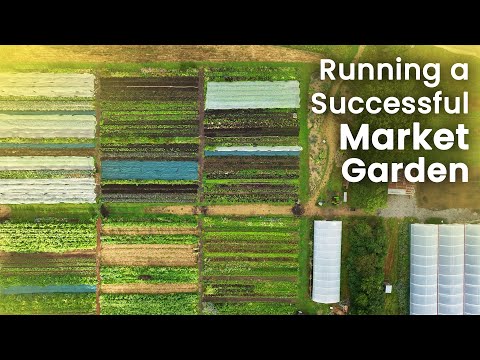
PermaNews Brief
Key Takeaways
Successful market gardening hinges on strategic site selection, robust soil health practices, and meticulous crop planning for sustained productivity.
- Choose sites with good sunlight, water, and soil.
- Prioritize soil health with minimal tillage and compost.
- Implement crop rotation for pest control.
- Practice succession planting for continuous harvest.
- Diversify crops to broaden produce range.
Why It Matters
Implementing these strategies can significantly enhance market garden yields and ecological resilience, reducing reliance on external inputs and fostering long-term sustainability.
What to Do Next
Assess your potential market garden site for sunlight, water availability, and existing soil conditions.
Recommended for: Market gardeners and aspiring farmers interested in regenerative agriculture and sustainable food production.
This article explores key strategies for establishing and operating a successful market garden, drawing insights from the Knepp Market Garden, a notable example of regenerative agriculture in action. The discussion emphasizes practical approaches to site selection, soil health, crop planning, and business management, all crucial elements for aspiring and existing market gardeners.
A foundational aspect highlighted is the importance of choosing an appropriate site. Factors such as sunlight exposure, water availability, and existing soil conditions are paramount. The Knepp Market Garden, for instance, benefits from its integration within a larger rewilding project, which naturally enhances biodiversity and ecological processes, indirectly supporting the market garden's productivity. However, even without such a large-scale rewilding context, careful site assessment for these fundamental elements is critical for any market garden.
Soil health is presented as the cornerstone of a productive and resilient market garden. The article advocates for practices that build and maintain healthy soil, such as minimal tillage, the consistent application of compost and other organic matter, and the use of cover crops. These methods contribute to improved soil structure, water retention, nutrient cycling, and microbial activity, all of which are essential for robust plant growth and reduced reliance on external inputs. The Knepp Market Garden exemplifies this by prioritizing soil biology and natural fertility, moving away from conventional, extractive farming methods.
Effective crop planning is another vital component for success. This involves careful consideration of crop rotation, succession planting, and diversity. Crop rotation helps to break pest and disease cycles and optimize nutrient utilization. Succession planting ensures a continuous harvest throughout the growing season, maximizing yield from a given area. Diversifying crops not only provides a wider range of produce for customers but also enhances ecological resilience within the garden, making it less susceptible to widespread crop failure. The article implicitly suggests that understanding local market demand and tailoring crop choices accordingly is also a key aspect of this planning.
Beyond the horticultural aspects, the article delves into the business side of market gardening. It underscores the necessity of a well-defined business plan, including market research, pricing strategies, and distribution channels. Direct sales, such as farmers' markets, community-supported agriculture (CSA) programs, and direct-to-restaurant sales, are often highlighted as effective ways to connect with customers and secure fair prices for produce. The Knepp Market Garden's success is partly attributed to its ability to connect with consumers who value regeneratively grown food, demonstrating the importance of marketing and building customer relationships.
Labor management and efficiency are also touched upon. Market gardening can be labor-intensive, so optimizing workflows, utilizing appropriate tools, and potentially employing seasonal workers are important considerations. The article suggests that thoughtful design of the garden layout can also contribute to labor efficiency, minimizing travel time and effort for tasks like planting, weeding, and harvesting.
Finally, the article implicitly emphasizes a long-term perspective. Building a successful market garden, particularly one based on regenerative principles, is an ongoing process that requires continuous learning, adaptation, and a commitment to ecological stewardship. The Knepp Market Garden serves as an inspiring example of how integrating ecological principles with sound business practices can lead to both environmental benefits and economic viability in the realm of small-scale agriculture.
Source: youtube.com
Related Analysis
- Food Forest Courses Shift From Theory to Build-Ready Skills — Several food forest courses now open with site assessment and guild-building rather than design theory, suggesting a dev…
- Practitioners Build Silvopasture Playbook Before Researchers Catch Up — A small but consistent set of signals from the Northeast U.S. shows farmers actively piloting silvopasture while formal …
Related on PermaNews
- Ivana Gazibara's $1.4B Initiative to Revamp Midwest Agriculture (Video)
- Permaculture: Sustainable Design for Thriving Ecosystems (Article)
- Daniel Vidal's Beloved Zero-Waste Fine Dining Experience (Video)
- Benedetta Kyengo's Journey to Restore Paradise After the Green Revolution (Video)
- Pablo Usobiaga - Zero Waste, Ancient Farmland and Mexico City's First Green Michelin Star (Video)
- The Shade-to-Protein Curve: Why Cooler Pastures Grow More Meat (Video)
Explore more in Food Systems & Growing — the full hub for this knowledge area.