Earthbag Root Cellar Build: 4-Year Journey, Eco-Friendly Storage
PermaNews Brief
Key Takeaways
An earthbag root cellar provides a low-cost, resilient method for long-term food storage.
- Earthbag construction uses local soil, offers significant cost savings.
- Rubble trench foundations provide frost-resistant base.
- Stacked earthbags with barbed wire create stable walls.
- Earthen plaster finishes offer breathability, pest resistance.
- Maintains stable cool temperatures for extended food storage.
- Adaptable to various climates with passive heating/cooling features.
Why It Matters
This construction method empowers homesteaders to build durable, affordable food storage infrastructure using readily available materials, enhancing food security and self-sufficiency.
What to Do Next
Research local soil composition to determine optimal clay content for earthbag construction in your area.
Recommended for: Homesteaders and permaculture practitioners looking for resilient, low-cost off-grid food storage solutions.
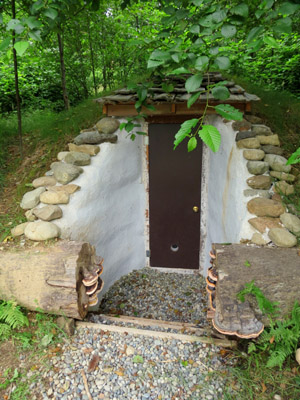
This detailed project report chronicles a 4-year earthbag root cellar build as an eco-friendly, low-cost alternative to conventional methods, ideal for permaculture homesteads pursuing regenerative self-sufficiency. Earthbags—polypropylene tubes filled with moist local soil—are stacked in running bond patterns, barbed-wired between layers for stability, and crowned with angled bond beams to shed water. The process starts with a rubble-trench foundation for frost resistance, followed by continuous filling and tamping in 4-inch lifts for density. Corners are reinforced with buckets of gravel for plumbness. Openings for doors/windows use arched lintels of multiple bag courses. Finishing includes earthen plaster (clay-slip with straw) for breathability and pest resistance, multiple coats for waterproofing. After 4 years, the structure maintains stable 35-40°F internals, storing roots like potatoes and carrots for 6-9 months without spoilage. Advantages: 70-90% cheaper than concrete ($0.50/sq ft materials), uses on-site resources, earthquake-resistant, excellent thermal mass. Challenges overcome: initial experimentation with soil mixes (20-30% clay optimal), wildlife deterrence via hardware cloth, ventilation via PVC pipes with fly screens. Integration with permaculture features passive heating/cooling via earth tubes, solar chimney effects. Yield data: 200 sq ft stores 500+ lbs produce. Blueprints adaptable for off-grid, with tools list (tampers, sliders) under $200. This hands-on case study offers step-by-step methods, trial-error insights, and long-term data, equipping practitioners with actionable knowledge for durable food storage in any climate.
Source: wildernesscollege.com
Related Analysis
- What Climate-Adapted Natural Building Actually Costs in Germany — Climate-adapted natural building in Germany — spanning straw bale, rammed earth, hempcrete, and Passive House-certified …
- Natural Builders Swap Whole-Structure Cob for Hybrid Wall Systems — Several sources suggest natural builders are dividing straw bale and cob by solar orientation within single homes—a func…
Related on PermaNews
- Ernst Götsch's Cacao Syntropy: Master Agroforestry Now (How-To Guide)
- Finnish Off-Grid: Rocket Mass Heater Performance in Greenhouse (Case Study)
- Berlins schwimmende Gärten: Permakultur auf dem Wasser (Case Study)
- Rodale Report 2025: Thermal Mass Boost in Solar Greenhouses (Case Study)
- AUTarcaMatricultura La Palma: Permakultur & Energieautarkie (How-To Guide)
- Earthaven Ecovillage: 30 Years Off-Grid with Hydro & Solar (Video)
Explore more in Shelter, Energy & Infrastructure — the full hub for this knowledge area.