Liz Carlisle: Perennial Foods, Native Ways, Plant Wisdom
By Liz Carlisle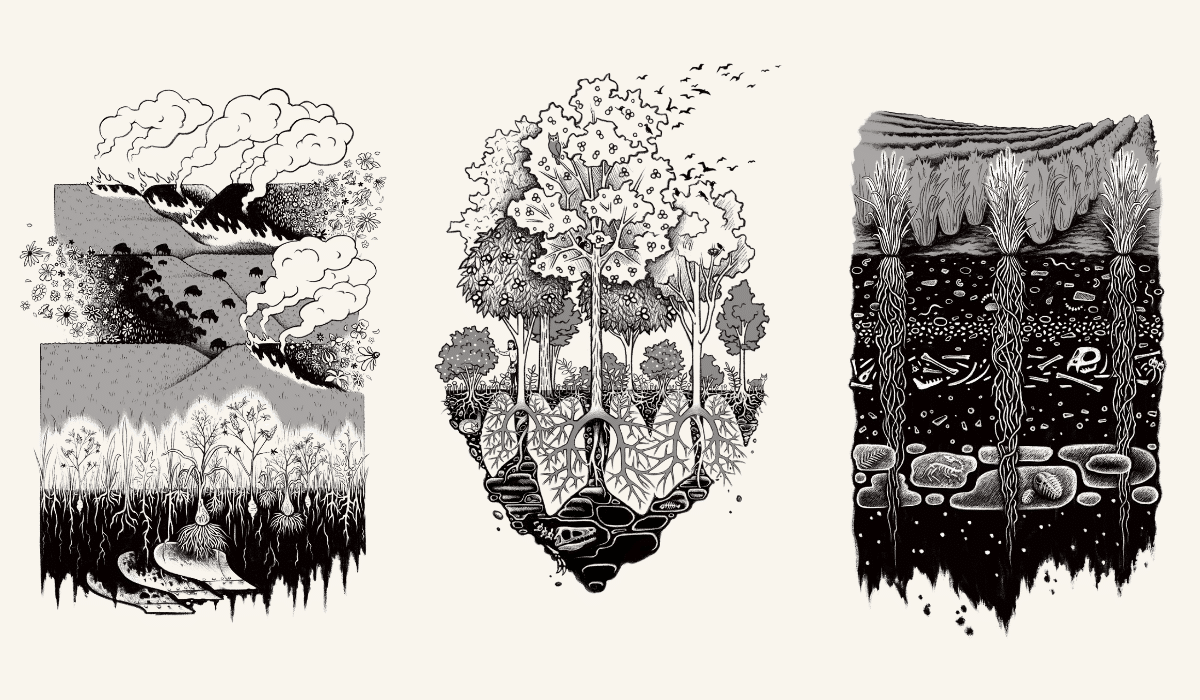
PermaNews Brief
Key Takeaways
Liz Carlisle champions perennial foods and Indigenous land stewardship as vital for resilient, regenerative agriculture and ecological revival.
- Perennial polycultures enhance resilience and self-sufficiency.
- Indigenous land stewardship integrates traditional knowledge with science.
- Diverse voices explore food forests and perennial grains.
- Bison reintroduction restores grasslands and biodiversity.
- Perennial crops reduce erosion, emissions, and climate vulnerability.
Why It Matters
Integrating perennial food systems and Indigenous practices offers practical solutions for climate change adaptation, food security, and ecosystem health.
What to Do Next
Research local initiatives or organizations focused on perennial agriculture or Indigenous foodways in your region.
Recommended for: Farmers, gardeners, land managers, policymakers, and anyone interested in sustainable food systems and ecological restoration.
This article features an in-depth interview with agroecologist Liz Carlisle ahead of her talk in Missoula, focusing on her co-edited book *Living Roots: The Promise of Perennial Foods*. It explores practical integration of Indigenous land stewardship into modern regenerative agriculture, emphasizing perennial polycultures that mimic native ecosystems for enhanced resilience and self-sufficiency. Carlisle discusses how the book compiles essays and poems from chefs, scientists, farmers, and Indigenous land stewards involved in urban food forests, experimental perennial grain plots, and bison reintroduction projects on grasslands. These initiatives draw directly from Native foodways, such as berry gathering traditions and buffalo prairie restoration led by Indigenous communities, to promote ecological and cultural revival. Key insights include the development of perennial grains like sorghum and silphium through test plots at institutions like The Land Institute, where robust root systems reduce soil erosion, emissions, and vulnerability to climate extremes compared to annual crops. Urban visionaries are planting food forests with fruit, nut trees, and berries, creating self-sustaining polycultures that enrich diets with nutrient-dense, flavorful foods while healing degraded lands. Ranchers adopt grazing patterns imitating native herbivores to steward healthier grasslands, fostering biodiversity and carbon sequestration. The conversation highlights field-tested methods from Indigenous scientists and leaders restoring bison to prairie homelands, integrating traditional knowledge with scientific innovation for broader food system transformation. Carlisle describes the book as a 'perennial polyculture' itself, blending diverse voices to illustrate how these practices address existential challenges like climate change and economic uncertainty. Practical details include the upcoming Blooms and Brews event on April 14 at Missoula County Fairgrounds, featuring discussions with farmer Josh Slotnick, co-editor Aubrey Streit Krug, and Blackfeet/Cherokee chef Mariah Gladstone, who will demonstrate perennial-based appetizers. This event underscores actionable steps for practitioners, from community-led food forests to scalable perennial grain commercialization, offering concrete pathways for regenerative living rooted in Indigenous practices. Overall, the piece provides practitioners with specific examples of transitioning from conventional monocultures to ecosystem-mimicking systems, backed by real-world implementations that enhance soil health, food security, and cultural continuity.
Source: thepulp.org
Related Analysis
- High-Salt Fertilizers Block Soil Microbes, Kempf Says — High-salt fertilizers disrupt soil microbes and microbial colonization, trapping farmers in chemical dependency. Biologi…
- Fertilizer Shortage Forces Reckoning on Nitrogen Sources — Fertilizer supply crisis drives farms toward nitrogen-fixing cover crops, compost, and legume rotations as alternatives.
Related on PermaNews
- Ernst Götsch's Cacao Syntropy: Master Agroforestry Now (How-To Guide)
- Designing Regenerative Resilience: Participatory Living Labs (How-To Guide)
- Lo—TEK: Indigenous Tech for Climate Solutions (Article)
- Nakivale's Regenerative Toilets: Refugee Resilience, Circular Sanitation (Case Study)
- AUTarcaMatricultura La Palma: Permakultur & Energieautarkie (How-To Guide)
- Pippin Home Designs: Regenerative Home Design Explained (How-To Guide)
Explore more in Food Systems & Growing — the full hub for this knowledge area.