Ventura's Regenerative Leap: Rodale Institute's 2024 Vision
By Rodale Institute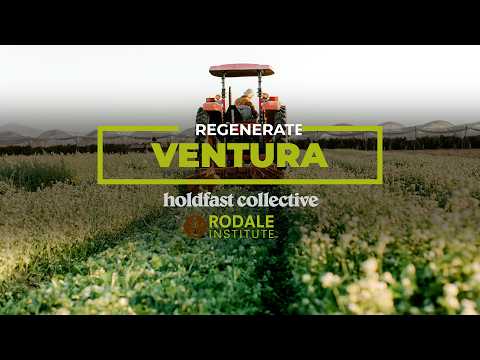
PermaNews Brief
Key Takeaways
Ventura County, California, is rapidly transitioning to regenerative organic agriculture, aiming to become the first fully regenerative organic farming region in the U.S.
- Ventura aims for full regenerative organic farming.
- Over 10,000 acres are now transitioning.
- Patagonia funded with $2.55 million.
- Technical assistance drove farmer engagement.
- BIPOC farmers showed strong participation.
Why It Matters
This initiative provides a scalable model for regions globally to adopt regenerative practices, demonstrating rapid positive impacts on soil health, economic viability, and community well-being.
What to Do Next
Explore the Rodale Institute's Regenerate Ventura initiative for detailed case studies and technical assistance models.
Recommended for: Farmers, policymakers, and community leaders interested in large-scale regional transitions to regenerative organic agriculture.
The video details Rodale Institute's Regenerate Ventura initiative, launched in 2024, aiming to transition all farms in Ventura County, California, to regenerative organic agriculture, positioning it as the first fully regenerative organic farming region in the United States. Key achievements include reaching 26% of all farmers countywide and transitioning over 10,000 acres toward organic practices. Funding support came from Patagonia's Holdfast Collective with an initial $1 million donation, followed by an additional $1.55 million over three years. Rodale agronomists delivered 230 hours of hands-on technical assistance through 12 community events and four bilingual field days, significantly impacting farming practices and improving health outcomes for families near agricultural fields. Engagement was strong among BIPO farmers at 39%. Practical implementations include building a greenhouse, which has been transformative in an area historically dominated by conventional farming. The initiative promotes natural, healthier regenerative organic practices such as soil health improvement, cover cropping, and biodiversity integration. It serves as a blueprint for scalable regenerative agriculture, demonstrating rapid results in soil restoration, economic viability, and community health. The project emphasizes collaboration between farmers, researchers, and locals, with on-ground demos at sites like Rancho Dos Hermanas for avocados and citrus, and McGrath Family Farm for strawberries. Science-based strategies cover integrated pest management alternatives, irrigation efficiency, and resilient production systems. This hands-on approach provides concrete, actionable insights for practitioners transitioning to regenerative organics, including technical assistance models, event structures, and measurable outcomes like acreage transitioned and farmer engagement rates, offering a replicable framework for other regions facing similar challenges in specialty crop production.
Source: youtube.com
Related Analysis
- High-Salt Fertilizers Block Soil Microbes, Kempf Says — High-salt fertilizers disrupt soil microbes and microbial colonization, trapping farmers in chemical dependency. Biologi…
- Fertilizer Shortage Forces Reckoning on Nitrogen Sources — Fertilizer supply crisis drives farms toward nitrogen-fixing cover crops, compost, and legume rotations as alternatives.
Related on PermaNews
- Ernst Götsch's Cacao Syntropy: Master Agroforestry Now (How-To Guide)
- Designing Regenerative Resilience: Participatory Living Labs (How-To Guide)
- Lo—TEK: Indigenous Tech for Climate Solutions (Article)
- Nakivale's Regenerative Toilets: Refugee Resilience, Circular Sanitation (Case Study)
- Pippin Home Designs: Regenerative Home Design Explained (How-To Guide)
- Federal Policy Shift: Native Regenerative Ag for Soil & Carbon (Article)
Explore more in Food Systems & Growing — the full hub for this knowledge area.