Jalama Canyon Ranch: CA's 1000-Acre Permaculture Lab
PermaNews Brief
Key Takeaways
Jalama Canyon Ranch, a 1,000-acre permaculture living laboratory, pioneers regenerative agriculture for regional resilience on California’s Central Coast.
- Rotational grazing mimics natural herd dynamics to enhance soil health.
- Year-round living roots, mulches, and no-till methods improve soil.
- Regenerative viticulture improves grape quality and water retention.
- Watershed restoration uses low-tech methods for water optimization.
- Educational workshops offer hands-on training in landscape restoration.
- Research tracks soil, biodiversity, and productivity improvements.
- Partnerships promote responsible wildcrafting and land vitality.
Why It Matters
This project demonstrates how large-scale regenerative agriculture can restore ecosystems, enhance biodiversity, and build regional food system resilience while remaining financially viable.
What to Do Next
Explore local land trusts and permaculture initiatives for similar ecosystem restoration projects in your area.
Recommended for: Land managers, agricultural professionals, and policymakers interested in scalable, financially viable regenerative agriculture and ecosystem restoration projects.
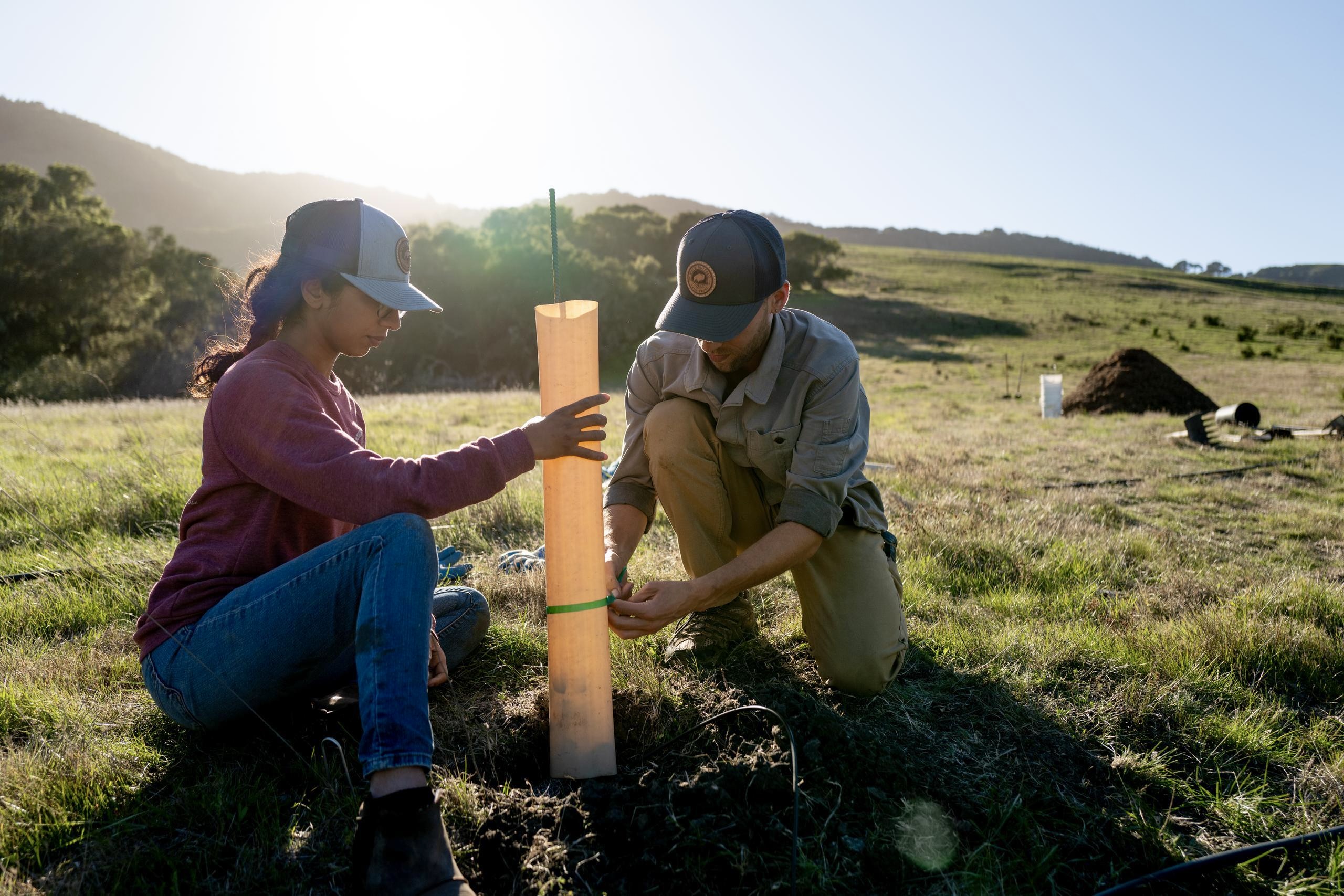
This project report details Jalama Canyon Ranch in Santa Barbara, a 1,000-acre living laboratory managed by White Buffalo Land Trust since 2021, integrating permaculture principles to restore native landscapes while pioneering regenerative agriculture for regional resilience. Acquired in partnership with the Land Trust for Santa Barbara County, the ranch applies holistic ecosystem management, reenvisioning cattle ranching through rotational grazing to mimic natural herd dynamics, enhancing soil health, biodiversity, and carbon sequestration. Key practices include keeping living roots in the ground year-round via cover crops, maintaining soil cover with mulches, minimizing disturbance through no-till methods, and maximizing diversity with climate-appropriate cropping systems, livestock integration, and native plantings. The five-acre vineyard demonstrates regenerative viticulture for Pinot Noir and Chardonnay, improving soil water-holding capacity, grape quality, and equitable labor while meeting certification standards. Watershed restoration across 80 acres, supported by The Roots Program, employs low-tech techniques like beaver dam analogues, post-assisted log structures, earthworks for water harvesting, and revegetation to optimize water cycles and build resilient landscapes. Educational initiatives include workshops like 'Working with Water: Applied Watershed Restoration for Resilient Landscapes' on November 1-2, 2025, offering hands-on training in landscape reading, design, permitting, construction, and monitoring. UC Santa Barbara research assesses impacts via remote sensing, tracking improvements in soil infiltration, biodiversity, and productivity from cattle rotations started in 2022. Partnerships, such as with Flamingo Estate for black sage harvesting, promote responsible wildcrafting that enhances land vitality. As a center for tours, volunteer days, and scientific research, the ranch models financially viable regenerative systems at scale, providing concrete data on ecological outcomes like increased microbial activity and reduced erosion, serving as a blueprint for practitioners seeking self-sufficiency and climate adaptation in Mediterranean climates.
Source: bluedotliving.com
Related Analysis
- High-Salt Fertilizers Block Soil Microbes, Kempf Says — High-salt fertilizers disrupt soil microbes and microbial colonization, trapping farmers in chemical dependency. Biologi…
- Fertilizer Shortage Forces Reckoning on Nitrogen Sources — Fertilizer supply crisis drives farms toward nitrogen-fixing cover crops, compost, and legume rotations as alternatives.
Explore more in Food Systems & Growing — the full hub for this knowledge area.