Water Flows! 1-Acre Market Garden Reaches Key Milestone
By Self Sufficient CJ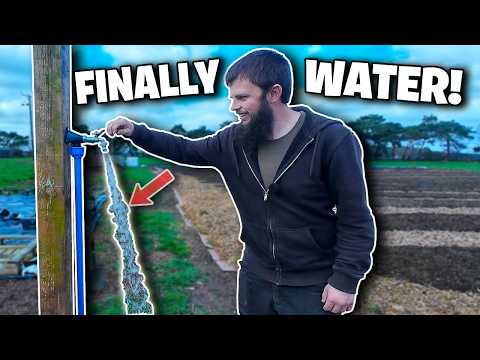
PermaNews Brief
Key Takeaways
A market garden achieved a major milestone by installing a comprehensive water system, enabling expansion and diversification.
- Reliable water transforms market garden viability.
- Irrigation supports diverse, high-value crops.
- Water infrastructure requires significant investment.
- Efficient systems reduce labor and boost yields.
- Crop rotation benefits from consistent water access.
Why It Matters
Secure water access is the bedrock of productive agriculture, allowing for intensified cultivation and greater food security.
What to Do Next
Assess your own water needs and potential irrigation solutions for your garden.
Recommended for: Market gardeners, aspiring commercial growers, and anyone facing water management challenges in agriculture.
The article details the significant progress made on a one-acre market garden project, specifically highlighting the crucial step of establishing a reliable water source. This development marks a major milestone for the endeavor, as access to water is fundamental for any agricultural operation, especially one aiming for commercial production.
Previously, the garden project faced challenges related to irrigation, which limited the scale and types of crops that could be cultivated. The absence of an efficient watering system meant that manual irrigation was likely the primary method, a labor-intensive and time-consuming process that is not sustainable for a market garden of this size. This bottleneck would have significantly impacted productivity and the overall viability of the operation.
The solution involved the installation of a comprehensive water system. This likely included drilling a well or connecting to a municipal water supply, followed by the setup of pumps, pipes, and an irrigation network. The article implies a substantial investment in infrastructure, indicating a long-term commitment to the market garden. The type of irrigation system chosen, whether drip, sprinkler, or a combination, would have been a critical decision based on factors like water availability, crop needs, and budget. Drip irrigation, for instance, is highly efficient in water usage, while sprinklers can cover larger areas more quickly.
With the water system now in place, the market garden is poised for significant expansion and diversification. The ability to consistently water crops opens up possibilities for growing a wider variety of produce, including those with higher water demands. This will allow for a more robust crop rotation plan, which is essential for maintaining soil health and preventing pest and disease outbreaks. A diverse range of crops also helps in mitigating risks associated with market fluctuations or crop failures.
The article suggests that the next steps will involve optimizing the irrigation schedule and potentially expanding the cultivated area. Efficient water management is crucial not only for plant health but also for resource conservation. This might involve using timers, sensors, or even more advanced smart irrigation systems to ensure that water is applied precisely when and where it is needed, minimizing waste.
Furthermore, the establishment of a water source will likely lead to an increase in planting density and overall yield. With consistent moisture, plants can grow more vigorously and produce higher quality produce. This directly translates to increased revenue potential for the market garden. The ability to irrigate effectively also extends the growing season, allowing for multiple successions of crops and a more continuous supply of produce to market.
This development is not just about water; it represents a foundational element for the entire permaculture design of the market garden. Water is a key component in creating a resilient and productive ecosystem. It supports not only the cultivated plants but also the broader biodiversity of the garden, including beneficial insects and soil microorganisms. The article implicitly celebrates this achievement as a critical step towards realizing the full potential of the one-acre market garden, moving it from a conceptual stage to a fully operational and productive agricultural enterprise. The journey of building a market garden is often characterized by overcoming such logistical hurdles, and securing a reliable water supply is undoubtedly one of the most significant.
Source: youtube.com
Related Analysis
- Colorado Beekeeper Lost 85% of Hives in 2021 — A Colorado beekeeper lost 85% of his hives in 2021. The sudden collapse raises questions about pesticide exposure in com…
- Bee Colony Losses Rise as Research Funding Declines — US beekeepers mobilize against colony losses and shrinking research budgets. Learn how apiarists are adapting to reduced…
Related on PermaNews
- Ernst Götsch's Cacao Syntropy: Master Agroforestry Now (How-To Guide)
- Finnish Off-Grid: Rocket Mass Heater Performance in Greenhouse (Case Study)
- Berlins schwimmende Gärten: Permakultur auf dem Wasser (Case Study)
- Rodale Report 2025: Thermal Mass Boost in Solar Greenhouses (Case Study)
- AUTarcaMatricultura La Palma: Permakultur & Energieautarkie (How-To Guide)
- Earthaven Ecovillage: 30 Years Off-Grid with Hydro & Solar (Video)
Explore more in Water, Climate & Adaptation — the full hub for this knowledge area.