Uganda: Volcafe's Regenerative Calendar Guides 23K Farmers
PermaNews Brief
Key Takeaways
Volcafe’s regenerative calendars offer Ugandan coffee farmers accessible, pictorial guides for climate-smart practices, boosting yields and incomes through ecological farming methods.
- Illustrated calendars guide 23,000 Ugandan coffee farmers.
- Visuals demonstrate composting, pest control, and mulching.
- Farmers report up to 30% yield increases and 40% cost savings.
- Low-tech format ensures accessibility and high adoption rates.
- Boosts ecological health, farm resilience, and coffee quality.
Why It Matters
This initiative demonstrates how low-tech, visual guides can empower smallholder farmers to adopt regenerative practices, leading to significant environmental and economic benefits.
What to Do Next
Explore creating visual, step-by-step guides for key regenerative practices relevant to your farm or community.
Recommended for: Smallholder farmers, agricultural extension workers, and development organizations seeking scalable and accessible regenerative farming solutions.
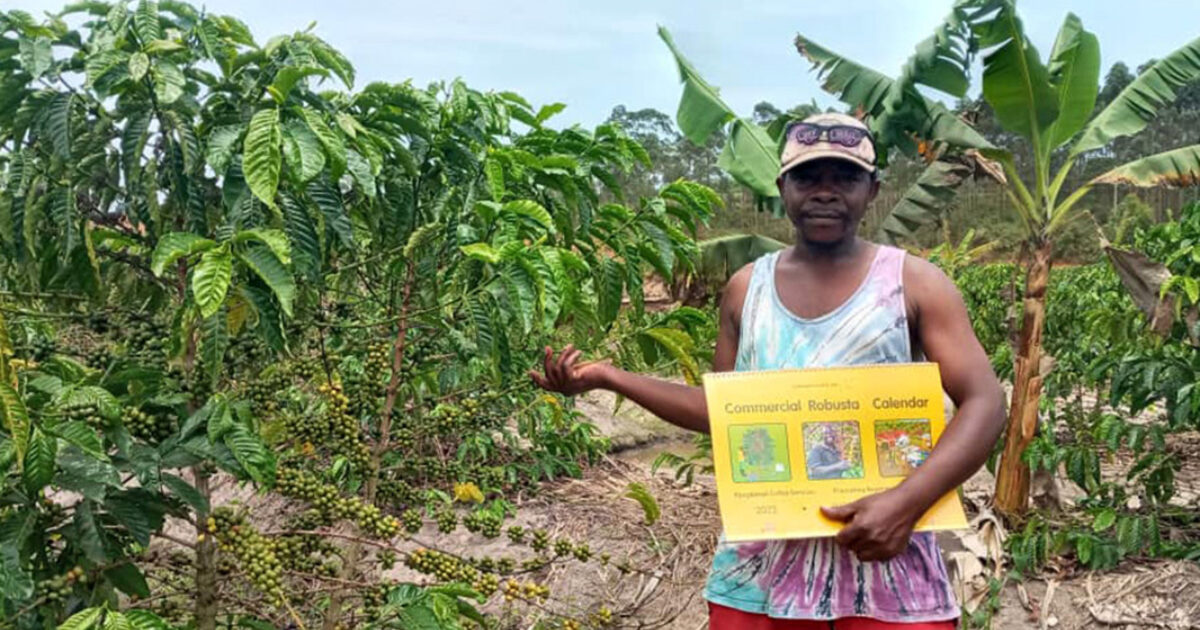
Volcafe's regenerative calendars provide illustrated, low-tech guidance to over 23,000 Ugandan coffee farmers since 2016, supplementing in-person trainings and model farm visits. Each durable calendar spans three years, detailing monthly tasks for good agricultural practices (GAP) and regenerative methods: soil rejuvenation via composting coffee cherry husks into organic fertilizer, integrated pest management with neem sprays and trap crops, and fertility enhancement through green manures and rock dust application. Farmers follow step-by-step visuals for pruning coffee trees, intercropping with legumes for nitrogen fixation, and mulching to suppress weeds and conserve water. Objectives target improved yields (up to 30% increases reported), higher incomes from reduced chemical costs (savings of 20-40%), and ecological safeguarding. Distribution includes 6,500 robusta and 17,000 arabica editions, reaching arabica and robusta regions. Practical impacts: farmers adopting calendars see healthier soils with higher organic matter, resilient crops against pests and drought, and diversified farms with shade trees boosting biodiversity. Low-tech format ensures accessibility—no literacy or tech barriers—with pictorial guides for tasks like erosion control terracing and biodiversity corridors. Combined with field schools, it drives adoption rates over 70% among recipients, leading to premium coffee quality for export. Economic resilience comes from lower inputs and stable yields amid climate variability. This tool exemplifies actionable, farmer-led regenerative transition, scalable across smallholdings for climate-smart coffee production.
Source: volcafe.com
Related Analysis
- High-Salt Fertilizers Block Soil Microbes, Kempf Says — High-salt fertilizers disrupt soil microbes and microbial colonization, trapping farmers in chemical dependency. Biologi…
- Fertilizer Shortage Forces Reckoning on Nitrogen Sources — Fertilizer supply crisis drives farms toward nitrogen-fixing cover crops, compost, and legume rotations as alternatives.
Related on PermaNews
- Ernst Götsch's Cacao Syntropy: Master Agroforestry Now (How-To Guide)
- Designing Regenerative Resilience: Participatory Living Labs (How-To Guide)
- Lo—TEK: Indigenous Tech for Climate Solutions (Article)
- Nakivale's Regenerative Toilets: Refugee Resilience, Circular Sanitation (Case Study)
- Pippin Home Designs: Regenerative Home Design Explained (How-To Guide)
- Federal Policy Shift: Native Regenerative Ag for Soil & Carbon (Article)
Explore more in Food Systems & Growing — the full hub for this knowledge area.