SD Soil Health Coalition: Regenerative Ag Builds Resilience
By Stan Wise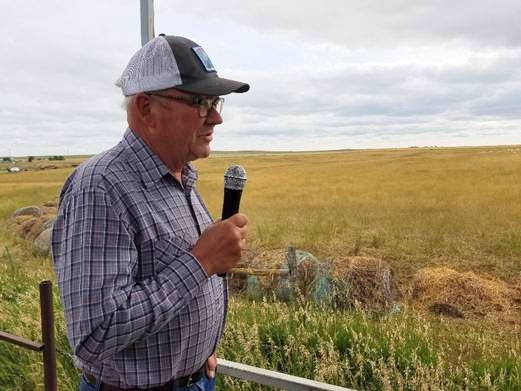
TL;DR: Regenerative agriculture practices significantly boost farm resilience and profitability by improving soil health, even in extreme weather conditions.
- Cover crops and no-till improve water infiltration and drought resistance.
- Managed grazing distributes nutrients and enhances soil structure.
- Increased organic matter and aggregate stability lead to higher yields.
- Reduced input costs and premium prices increase farm profitability.
- Biology-driven soil metrics build antifragile farming systems.
Why it matters: Adopting regenerative practices can help farms withstand extreme weather events and reduce economic risks, ensuring long-term viability and food security.
Do this next: Implement diverse cover crop cocktails to maintain living roots for over 200 days annually.
Recommended for: Farmers, land managers, and agricultural policymakers interested in practical, field-tested strategies for building resilient and profitable farming systems.
This March 22, 2026, field report by Stan Wise of the South Dakota Soil Health Coalition details how regenerative practices enhance operational resilience on working farms facing extreme weather, with practitioner insights from high-plains operations. Key strategies include cover crop cocktails (8-12 species) maintaining 200+ days of living roots, boosting infiltration rates from 0.5 to 2.5 inches/hour and cutting runoff 60%; no-till drilling into residue for residue cover >30%, stabilizing yields during 2025's flash floods (10-20 bu/acre advantage); and mob grazing with 50,000-head stock density for 4-6 hour bursts, distributing manure evenly and cycling 90% of nutrients onsite. Soil health metrics from 50+ farms show aggregate stability up 25% (wet sieve test), organic matter 0.4-1.2% gains in 3 years, and BRIX levels 12-18° in forages indicating nutrient density. Carbon sequestration hits 1.5-2.5 t/ha/yr via deep-rooted radishes pulling residues below frost line. Economic resilience: input costs drop $40-80/acre, with 15% premium for soil-tested grain. Wise shares anecdotes from corn-soy farms surviving -20°F winters with polycultures, vs. monocrop losses; wheat operations harvesting 20% more post-drought via mycorrhizal boosts. Protocols include Haney soil respiration tests targeting 10-15 ppm CO2-C, electrical conductivity <2 mmhos/cm to avoid salinity, and VESS scoring for structure. Integration with self-sufficiency: on-farm seed saving from diverse plots, biofertilizers from compost tea (1:100 dilution). Policy ties to EQIP for cost-share on planters. Challenges like cover crop termination use roller-crimpers or frost seeding. This report provides concrete, field-tested steps for permaculture scaling, proving regen builds antifragile systems through biology-driven soil metrics.
Source: aberdeeninsider.com
Related Analysis
- Farms Build Resilience, Pivot to Regenerative Soil — New initiatives and analysis explicitly frame regenerative agriculture as a direct solution for climate resilience, focu…
- Federal Policy Pivots, Builds Indigenous Agriculture Frameworks — Federal policy trends are integrating Indigenous knowledge with soil science in regenerative agriculture, shifting polic…
Related on PermaNews
- Federal Policy Shift: Native Regenerative Ag for Soil & Carbon (Article)
- Nagaland's Jhum-Alder Agroforestry: Climate-Smart Farming (Article)
- Aboriginal Cool Burns: Permaculture's Ancient Fire Wisdom (Case Study)
- Crop Rotation Boosts Soil Biodiversity: Global Meta-analysis (Article)
- Revolutionizing Agriculture: People, Nature, & a Fertile Earth (Article)
- BEAM Compost: Pilzkompost & Vieh für Bodengesundheit (Case Study)
Explore more in Food Systems & Growing — the full hub for this knowledge area.