Constructing a 32 kWh Off-Grid Solar Battery: A How-To Guide
By Farms Villa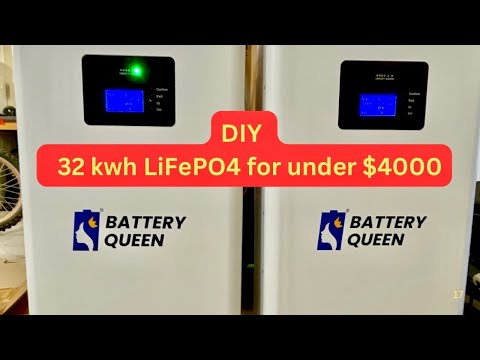
PermaNews Brief
Key Takeaways
Learn how to build a practical off-grid solar battery system for various applications.
- Step-by-step assembly instructions provided
- Focus on safety during installation
- Compatible with solar and hybrid energy sources
- Reinforces importance of supporting hardware
- Integrates battery cells and management effectively
Why It Matters
This tutorial empowers individuals to create a reliable, renewable energy storage solution, addressing the growing need for off-grid power systems.
What to Do Next
Watch the video to understand the assembly process in detail.
Permaculture Context
For permaculture practitioners, energy sovereignty is not a luxury — it is a foundational layer of any serious resilient homestead design, sitting alongside water catchment and soil health as a non-negotiable system element. The ability to build your own battery storage, rather than depending on proprietary systems from manufacturers who control your warranty, firmware, and replacement parts, represents a meaningful shift in how regenerative practitioners can relate to their energy infrastructure. A 32 kWh bank built from understood, serviceable components means you can repair what breaks, expand what falls short, and pass that knowledge to your community rather than calling a technician. For someone designing a food forest, running a root cellar, or managing irrigation pumps through a dry season, that scale of storage also opens genuine operational independence from the grid across multiple consecutive cloudy days. The deeper permaculture implication here is one of appropriate technology: systems you understand deeply enough to maintain are systems that actually persist. Energy storage built with this level of hands-on literacy becomes infrastructure, not just equipment.
Recommended for: DIY enthusiasts seeking reliable off-grid energy solutions.
This video is a practical, step-by-step tutorial on building a 32 kWh off-grid solar battery system using Seplos components and LiFePO4 cells. It is aimed at viewers who want to power a home, RV, or cabin with a self-contained energy storage setup, and it focuses on the concrete construction details that matter in a real installation. The tutorial covers how to select and assemble lithium-ion cells for off-grid use, how to configure and wire the battery management system (BMS), and how to connect the pack safely so it functions as a reliable battery bank. It also discusses the supporting hardware required for a complete build, including enclosures, cables, and other components that are often overlooked but essential for safe operation.
A key strength of the content is that it does not stay at a high level. It emphasizes the practical workflow of creating a functioning off-grid battery, from parts selection through final assembly. The video explicitly addresses safety concerns around wiring and cell connections, which is especially important in lithium battery projects where incorrect installation can lead to performance problems or hazards. It also frames the battery as part of a broader renewable-energy system, noting that the stored energy can come from solar, wind, or other generation sources. That makes the tutorial relevant not only to solar-only setups but also to hybrid off-grid systems.
For practitioners, the actionable value is in the integration advice: how to combine battery cells, BMS, cabling, and enclosure choices into a single energy storage solution that can serve as the backbone of a resilient off-grid power system. The result is a hands-on guide that goes beyond generic battery theory and instead shows the physical and electrical steps needed to build a large-capacity home energy store. Because it includes actual build context, system goals, and implementation details, it qualifies as a high-signal how-to resource for DIY off-grid energy storage.
Source: youtube.com
Related Analysis
- Natural Builders Swap Whole-Structure Cob for Hybrid Wall Systems — Several sources suggest natural builders are dividing straw bale and cob by solar orientation within single homes—a func…
- Earthship Builders Pioneer First Passive House Certified Projects — Early 2025 evidence shows PHI-certified earthship retrofits and a rocket-mass-heater tiny home meeting Passive House sta…
Related on PermaNews
- Finnish Off-Grid: Rocket Mass Heater Performance in Greenhouse (Case Study)
- Rodale Report 2025: Thermal Mass Boost in Solar Greenhouses (Case Study)
- Earthaven Ecovillage: 30 Years Off-Grid with Hydro & Solar (Video)
- 2025: Rocket Mass Heaters in PHI-Certified Earthship Tiny Homes (Case Study)
- Off-Grid Water: Cistern Design & Sizing for Security (How-To Guide)
- Net-Zero Greenhouse Design: Year-Round Food Production via ATTRA (How-To Guide)
Explore more in Shelter, Energy & Infrastructure — the full hub for this knowledge area.