Sons' Crooked Cabin: Building Lessons, Unexpected Impact
By Justin Rhodes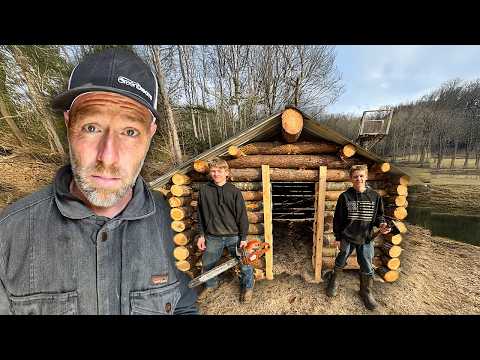
TL;DR: Two young boys build a "crooked cabin" from scrap materials, teaching their permaculture-experienced father profound lessons about unconventional learning and the value of imperfect, self-directed projects.
- Kids’ self-directed projects foster profound learning.
- Embrace imperfection in natural building endeavors.
- Scrap materials offer creative construction solutions.
- Collaboration and persistence overcome setbacks.
- Parental non-intervention empowers children’s growth.
Why it matters: This story highlights the unexpected educational value of allowing children to pursue their own building projects with minimal adult interference, often leading to deeper learning than formal instruction.
Do this next: Consider a small, self-directed building project for children using reclaimed materials.
Recommended for: Parents, educators, and anyone interested in fostering self-reliance and practical skills through hands-on, unconventional projects.
The article recounts a personal experience involving the construction of a small cabin by the author's young sons, highlighting the unexpected lessons and profound impact this project had on the author. The narrative begins with the author's initial skepticism and reluctance when his sons, aged six and eight, proposed building a cabin. Despite the author's extensive experience in construction and permaculture, he initially dismissed their idea as impractical and beyond their capabilities, envisioning a messy, time-consuming endeavor that would likely end in frustration.
However, the boys were persistent. They had a clear vision, having drawn detailed plans and even started gathering materials, primarily scrap wood and discarded pallets found around their property. Their enthusiasm and self-reliance eventually wore down the author's resistance. He decided to allow them to proceed, albeit with minimal intervention, expecting to step in only when they inevitably encountered significant difficulties. This decision marked a turning point, shifting the project from a potential chore for the author to an observation of his sons' independent efforts.
As the boys began construction, the author watched from a distance, occasionally offering a tool or a piece of advice, but largely allowing them to figure things out on their own. He noted their collaborative spirit, their problem-solving attempts, and their unwavering determination despite numerous setbacks. They struggled with basic tasks like cutting wood straight, hammering nails without bending them, and ensuring structural integrity. The resulting structure was, as the title suggests, "crooked." It was far from perfect, with uneven walls, a leaning roof, and gaps between boards. From a professional builder's perspective, it was a testament to amateur construction.
Yet, it was precisely this imperfection that became a central theme of the author's reflection. He observed that despite the cabin's aesthetic and structural flaws, his sons were immensely proud of their creation. They saw not a crooked shack, but a functional space they had built with their own hands. This pride was infectious, and it began to challenge the author's own rigid standards of perfection and efficiency. He realized that his initial judgment had been based on adult expectations of outcome, rather than appreciating the process and the intrinsic value of the effort.
The project became a powerful lesson in several areas for the author. Firstly, it underscored the importance of allowing children to pursue their own ideas, even if they seem ambitious or likely to fail. He recognized that by stepping back, he had fostered their creativity, resilience, and problem-solving skills. Secondly, it highlighted the difference between adult-driven and child-driven learning. The boys were not following instructions; they were experimenting, making mistakes, and learning from them in a deeply experiential way. This contrasted sharply with more structured educational approaches.
Furthermore, the author reflected on his own relationship with perfectionism. He admitted that his professional background often led him to prioritize efficiency and flawless execution. The "crooked cabin" served as a tangible reminder that sometimes, the journey and the learning derived from it are more valuable than the final product's aesthetic appeal or technical perfection. He learned to appreciate the beauty in imperfection and the profound satisfaction that comes from creating something, regardless of its flaws.
The experience also fostered a deeper connection with his sons. By allowing them this autonomy, he witnessed their capabilities and their unique personalities unfold in a new context. The cabin became a symbol of their shared experience, a physical manifestation of their collaboration and perseverance. It was a space they had built together, and it held a special significance that a professionally built structure could never replicate.
In conclusion, the article is a contemplative piece about the unexpected wisdom gained from a seemingly simple project. The "crooked cabin," built by two young boys, became a powerful metaphor for embracing imperfection, fostering independence, and re-evaluating personal standards of success. The author's initial reluctance transformed into profound admiration and self-reflection, ultimately enriching his understanding of parenting, creativity, and the true meaning of accomplishment.