Cattle Break Out! Homesteaders' Escape Challenge
By Living Traditions Homestead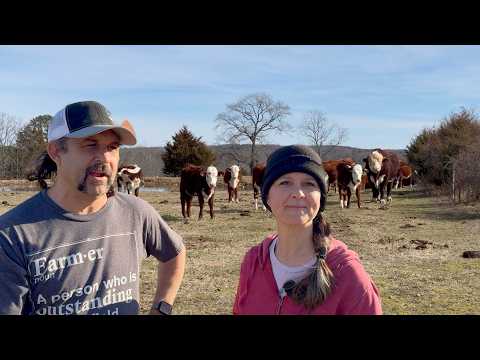
TL;DR: Cattle demonstrate surprising problem-solving abilities by learning to open gates, highlighting the need for vigilant livestock management.
- Cattle can learn to exploit weaknesses in fencing and gates.
- Standard latches may not be secure enough for intelligent livestock.
- Escaped livestock pose risks to neighbors, crops, and traffic safety.
- Proactive, adaptive management prevents repeat escapes.
- Reinforce gate security beyond basic barbed wire fences.
Why it matters: Understanding animal behavior is crucial for effective and humane livestock management, preventing significant economic and relational costs.
Do this next: Inspect all gate latches and fencing for potential weaknesses your animals could exploit.
Recommended for: Homesteaders and permaculture practitioners looking to improve livestock containment and learn from animal behavior.
The article from Living Traditions Homestead describes a recurring challenge faced by homesteaders: livestock escaping their enclosures. The author recounts a specific incident involving their cattle, highlighting the intelligence and adaptability of these animals. Initially, the cattle were contained within a pasture secured by a five-strand barbed wire fence, which had proven effective for a considerable period. However, the homesteaders discovered the cattle had breached this barrier, finding them grazing in an adjacent, unplanted field.
Upon investigation, it was determined that the cattle had not broken through the fence in a conventional manner, but had instead learned to exploit a weakness in the gate. The gate, a standard metal farm gate, was secured with a chain and a simple hook. The cattle, through observation and perhaps trial and error, had figured out how to manipulate the hook with their noses, effectively unlatching the gate and allowing themselves to pass through. This demonstrated a level of problem-solving ability that surprised the homesteaders.
The immediate solution involved reinforcing the gate's latching mechanism. The homesteaders added a more complex system, likely involving multiple latches or a more secure type of hook that would be harder for the cattle to dislodge. This temporary fix was intended to prevent further escapes while a more permanent solution could be devised. The incident underscored the constant need for vigilance and adaptation when managing livestock, as animals can quickly learn and overcome perceived obstacles.
The article then delves into the broader implications of livestock escaping. Beyond the immediate inconvenience of retrieving the animals, there are several potential risks. Escaped cattle could wander onto neighboring properties, potentially damaging crops or gardens, which could lead to strained relationships with neighbors. There's also the danger of the animals straying onto roads, posing a traffic hazard and risking injury to themselves or others. Furthermore, if the cattle are breeding stock, an escape could lead to unintended pregnancies with unknown or undesirable bulls, compromising breeding programs.
The homesteaders reflected on the importance of robust fencing and gate systems. They emphasized that what might seem secure to a human eye may not be sufficient for determined and intelligent animals. This experience prompted them to re-evaluate their entire perimeter fencing, considering upgrades to ensure long-term containment. Options discussed included adding electric fencing strands to existing barbed wire, or even investing in more robust types of fencing like woven wire or high-tensile electric fences, particularly in areas where cattle exert more pressure.
The narrative also touched upon the psychological aspect of livestock management. The homesteaders expressed a mix of frustration and admiration for their cattle's ingenuity. This incident served as a powerful reminder that farming and homesteading are continuous learning processes, requiring constant observation, problem-solving, and a willingness to adapt to the behaviors of the animals under their care. The article concludes with a reinforcement of the idea that while challenging, these experiences contribute to the overall knowledge and resilience of homesteaders, preparing them for future unexpected situations.