Local Apricot Cleft Grafting: Scion to Rootstock Guide
By Diego Footer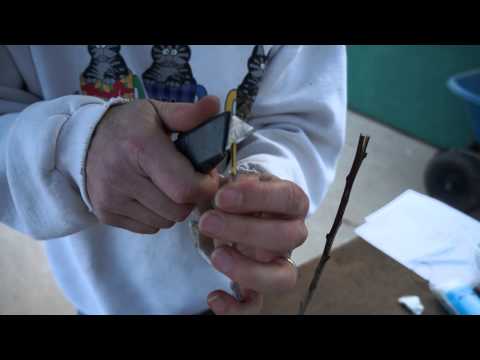
PermaNews Brief
Key Takeaways
Cleft grafting offers a reliable method for propagating fruit trees, especially when joining a smaller scion to a larger rootstock, and is ideal for preserving local varieties.
- Cleft grafting joins scion to larger rootstock.
- Dormant scion wood with 2-3 buds is key.
- Prepare rootstock with a clean, level cut.
- Make a 1.5-2 inch deep vertical cleft.
- Scion wedge must be 1.5-2 inches long.
- Ensure cambium layers align for success.
Why It Matters
This technique allows gardeners to expand their orchards with favored varieties or adapt existing trees to new fruit types, enhancing genetic diversity and resilience.
What to Do Next
Gather dormant scion wood and appropriate rootstock to practice the cleft grafting technique.
Recommended for: Home gardeners and small-scale orchardists interested in propagating fruit trees and preserving local varieties.
Grafting fruit trees is a valuable technique for propagating desired varieties and can be particularly useful for preserving local, well-adapted cultivars. One common and effective method for joining a scion (the desired fruiting wood) to a rootstock (the root system) is the cleft graft. This technique is often employed when the rootstock is significantly larger in diameter than the scion, or when working with dormant wood.
The process begins with the selection of appropriate materials. The scion wood should be dormant, meaning it was collected from the previous season's growth before bud break in the spring. It should be healthy, free from disease or damage, and ideally have two to three good buds. The rootstock, on the other hand, can be a young tree or a branch on an established tree that you wish to convert. Its diameter should be at least as large as, if not larger than, the scion.
Preparation of the rootstock is the first critical step. If grafting onto a young tree, it should be cut cleanly across at a height that allows for convenient future management, typically 6-12 inches above the ground. If grafting onto an existing branch, the branch is similarly cut back. The cut surface should be smooth and level.
Next, a vertical cut, or "cleft," is made into the center of the rootstock's cut surface. This cleft should be approximately 1.5 to 2 inches deep, depending on the length of the wedge prepared on the scion. A grafting tool or a sturdy knife can be used for this, and it's important to ensure the cleft is straight and even. A wedge or a small screwdriver can then be inserted into the cleft to hold it open slightly, making it easier to insert the scion.
The scion wood requires careful preparation to ensure a successful union. The bottom end of the scion is shaped into a long, tapering wedge. This wedge should be about 1.5 to 2 inches long, with two opposing cuts that meet at a sharp point. The cuts should be smooth and clean, exposing as much cambium (the growth layer just beneath the bark) as possible. It's crucial that the outer edge of this wedge is slightly thicker than the inner edge, as this will help ensure good contact with the rootstock's cambium.
With the rootstock cleft held open, the prepared scion is carefully inserted. The goal is to align the cambium layers of both the scion and the rootstock. Since the rootstock is often wider, the scion should be positioned slightly to one side of the cleft, ensuring that at least one side of its cambium is in direct contact with the rootstock's cambium. If the rootstock is large enough, two scions can be inserted, one on each side of the cleft, increasing the chances of success. Once the scion is in place, the wedge or tool holding the cleft open is removed, allowing the rootstock to firmly grip the scion.
After insertion, the entire graft union must be sealed to prevent desiccation and protect against disease. Grafting wax or grafting tape is commonly used for this purpose. The wax or tape should completely cover the cut surfaces of the rootstock, the inserted portion of the scion, and any exposed cuts on the scion itself, including the tip. This sealing is vital for maintaining moisture and promoting healing.
Following grafting, ongoing care is important. The grafted tree should be monitored for signs of growth, and any suckers that emerge from the rootstock below the graft union should be removed promptly. It can take several weeks for the graft to show signs of successful union, and patience is key. With proper technique and care, cleft grafting offers a reliable method for propagating desired fruit tree varieties and preserving valuable local genetics.
Source: youtube.com
Related Analysis
- Rainforest Alliance Launches Certification Tied to Soil Results — A developing direction in regenerative ag certifications demands measurable soil outcomes, not just practice adoption. R…
- Campbell's Corporate Grants Push Farmers Into Regenerative Trials — Campbell's Grower Grants are funding real-acre regenerative trials, offering a corporate-backed mechanism for on-farm ex…
Related on PermaNews
- Veredelung basics: Permakultur-Skills Folge 2.03 (Video)
- Growers Daily 356: Seed to Graft – Wild Tomato Tips (Podcast)
- Propagate Like a Pro: Grafting, Cuttings & Rooting Secrets (Video)
- ACS Distance Ed: 20-Hour Budding & Grafting Mastery (Article)
- 2026 Bench Grafting: Sgt. Ryan Pears & Shell Apples Update (Video)
- Grafting Workshop: Fruit Tree to Take Home, €60. terre-paille.fr (Video)
Explore more in Food Systems & Growing — the full hub for this knowledge area.