North America's Landscapes: Depraved & Misery-Inducing Ep. 1
By Crime Pays But Botany Doesn't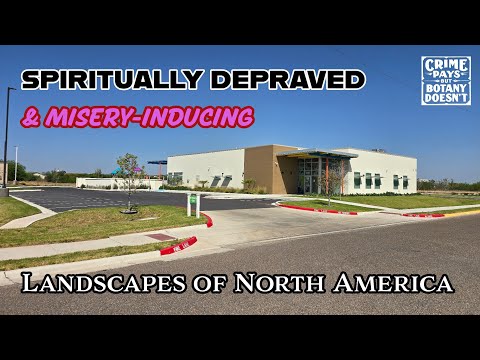
TL;DR: North American landscapes, dominated by monocultures and non-native plants, contribute to ecological decline and human detachment from nature.
- Conventional land use fosters spiritual emptiness.
- Monoculture lawns are ecological deserts.
- Non-native plants create unsustainable landscapes.
- Dominant practices ignore ecological health.
- Prioritizing convenience harms biodiversity.
Why it matters: Current landscape design profoundly impacts ecological health and human well-being, contributing to a sense of alienation from nature.
Do this next: Consider reducing lawn size and incorporating native plants in your yard.
Recommended for: Anyone interested in permaculture, sustainable living, or the ecological and spiritual impacts of landscape design.
This article, the first in a series, critically examines the prevailing landscape design and management practices across North America, arguing that they contribute to a sense of spiritual emptiness and widespread misery. The author contends that the dominant approach to land use, particularly in urban and suburban environments, prioritizes convenience, uniformity, and a narrow aesthetic over ecological health, biodiversity, and human well-being.
A central theme is the concept of "spiritually depraved" landscapes, which the author defines as environments that actively diminish the human spirit by disconnecting individuals from natural processes and fostering a sense of alienation. This is attributed to several factors. Firstly, the widespread adoption of monoculture lawns, often maintained with intensive chemical inputs and excessive water, is highlighted as a prime example. These lawns, while superficially appearing "neat," are portrayed as ecological deserts, offering minimal habitat for wildlife, contributing to pollution, and requiring significant resources for their upkeep. The author suggests that the endless expanse of identical, chemically-treated lawns creates a monotonous and sterile environment that offers little in the way of sensory stimulation or connection to the natural world.
Secondly, the article critiques the prevalent use of non-native, ornamental plants that require constant intervention to survive in their introduced environments. This practice is seen as a rejection of the indigenous flora and fauna, leading to a loss of regional identity and ecological resilience. The author argues that these "designer" landscapes often lack the intricate relationships and symbiotic networks found in natural ecosystems, resulting in fragile and unsustainable environments that demand continuous human input to maintain their artificial appearance. This constant battle against nature, rather than working with it, is presented as a source of frustration and a drain on resources.
Furthermore, the author points to the extensive use of impervious surfaces, such as concrete and asphalt, as another significant contributor to these "misery-inducing" landscapes. These surfaces prevent water infiltration, exacerbate urban heat island effects, and eliminate valuable habitat. The article suggests that the dominance of hardscaping over permeable, living ground further disconnects people from the earth and contributes to a sense of harshness and artificiality in their surroundings. The lack of green spaces and natural elements in many urban areas is seen as directly impacting mental health and overall quality of life.
The article also touches upon the economic implications of these landscape choices. The continuous need for fertilizers, pesticides, herbicides, irrigation, and specialized maintenance equipment represents a significant financial burden on individuals and communities. This expenditure, the author implies, is often for the sake of maintaining an ecologically unproductive and spiritually unfulfilling aesthetic. The author suggests that these financial resources could be better allocated to creating more sustainable, biodiverse, and genuinely enriching environments.
In essence, the article argues that the current paradigm of landscape design in North America is fundamentally flawed. It prioritizes a superficial, human-centric control over nature, leading to environments that are ecologically impoverished, economically inefficient, and ultimately detrimental to human spiritual and psychological well-being. The author implicitly calls for a re-evaluation of these practices, advocating for a shift towards more ecologically sound, regionally appropriate, and spiritually enriching approaches to land stewardship. The piece sets the stage for subsequent episodes to explore alternative, more regenerative models of landscape design and management.